


910-279-9398 Download Our Brochure
  • Homes for sale in coastal southeastern NC

Archive for the ‘Mortgage/Lending’ Category

Selling Your Home? What You Should Know About Price Cuts vs. Rate Buydowns.

Posted by
Selling Your Home? What You Should Know About Price Cuts vs. Rate Buydowns. Simplifying The Market

In today’s market, a growing number of sellers are opting to do something called a price cut – especially when their house has been on the market for a while without any bites.

According to HousingWire Data as many as 4 in 10 (43%) sellers are going this route – that’s the highest it’s been in 4 years. But what if there’s another (potentially better option) for your bottom line? And it’s just as appealing, if not more so, to today’s buyers?

Enter the rate buydown.

Why Buyers Expect a Deal

First, let’s set the stage on why some compromise may be necessary in today’s market.

In September, Redfin says there were 63% more sellers than buyers in the market. And with so many sellers active and relatively few buyers by comparison, those purchasers are realizing they have more power. And as mortgage rates continue to put a squeeze on their budgets, they’re leaning in and using it.

One of the most common negotiation points? The price.

That’s because they want to feel like they’re getting a deal and they want to see their monthly payment drop. And since buyers can’t control rates, the price feels like the most obvious lever to pull.

But the savviest sellers realize being flexible doesn’t always mean a lower price, paying for a buyer’s rate buydown might work better.

What Is a Rate Buydown?

A buydown is money paid at closing to lower the buyer’s mortgage rate. When you pay it as the seller, you are paying some of the buyer’s interest ahead of time, so the buyer gets a lower rate and monthly payment. And that’s especially appealing to today’s buyers.

  • Temporary buydowns lower the rate for the first few years, then it goes back to the full rate. The more years a buydown covers, the more it costs. These work well for buyers who expect to refinance within a certain amount of time.

  • A permanent buydown lowers the rate for the whole loan. These are paid for with “discount points.” One point costs 1% of the loan. According to FICO, each point generally lowers the rate by about a quarter of a percent. This type of buydown works well for buyers who plan to stay in the home for a long time.

Same Money, Different Results

And here’s why these can be a win-win for both buyers and sellers. Rate buydowns help sellers stand out in a crowded market and they can have a bigger impact on your buyer than a price cut would.

Here’s an example to show you what that could look like. 

Let’s say you’re willing to make a $10,000 concession to help get the deal done. Take a look at these three ways to spend that money and the impact they could have on a buyer’s $420,000, 30-year fixed loan at 7%:

It’s the same $10,000 from the seller. But a 2-1 buydown saves the buyer about eight times more each month in the first year.

And since most buyers shop by monthly payment, that’s what grabs their attention.

That’s what makes a rate buydown worth considering. Instead of reducing your asking price, you may be able to use that same money to have a bigger impact on your buyer’s monthly payments. And depending on what matters most to that buyer, the immediate savings could be more appealing than a price reduction.

The key is working with your agent and the buyer’s lender to compare the options and see which one makes the most sense.

Things To Know

  • Loan programs cap how much a seller can pay toward a buyer’s costs. 

  • Money toward buydowns doesn’t limit what else a buyer may ask a seller to pay for. Buyers may still ask for repairs or other concessions.

  • Putting the buydown offer in your listing lets agents and buyers know it’s an option.

  • Your agent can run scenarios on buydowns and other costs of selling in advance so you’re prepared when an offer comes in.

As Lawrence Yun, Chief Economist at the National Association of Realtors (NAR), says:

“Home sellers need to be realistic about local market conditions, which could require price discounts and other incentives to attract buyers.”

And sellers who offer solutions like buydowns can make meaningful impact where home buyers need it most: in their wallets.

Bottom Line

When you’re looking for ways to make your house more appealing to buyers, a price reduction isn’t your only option. A mortgage rate buydown could help a buyer save more each month, especially in the early years of their loan.

Talk to your agent or a trusted lender which incentives could make the biggest difference for buyers in our market, while still protecting your bottom line.

What Experts Forecast for Mortgage Rates and Home Prices in 2027

Posted by
What Experts Forecast for Mortgage Rates and Home Prices in 2027 Simplifying The Market

When it comes to housing, two of the biggest questions on everyone’s mind right now are:

  1. What’s next for mortgage rates?

  2. Where will home prices go from here?

And if you’re weighing whether to move in the next few months or wait until 2027, here’s what you should know.

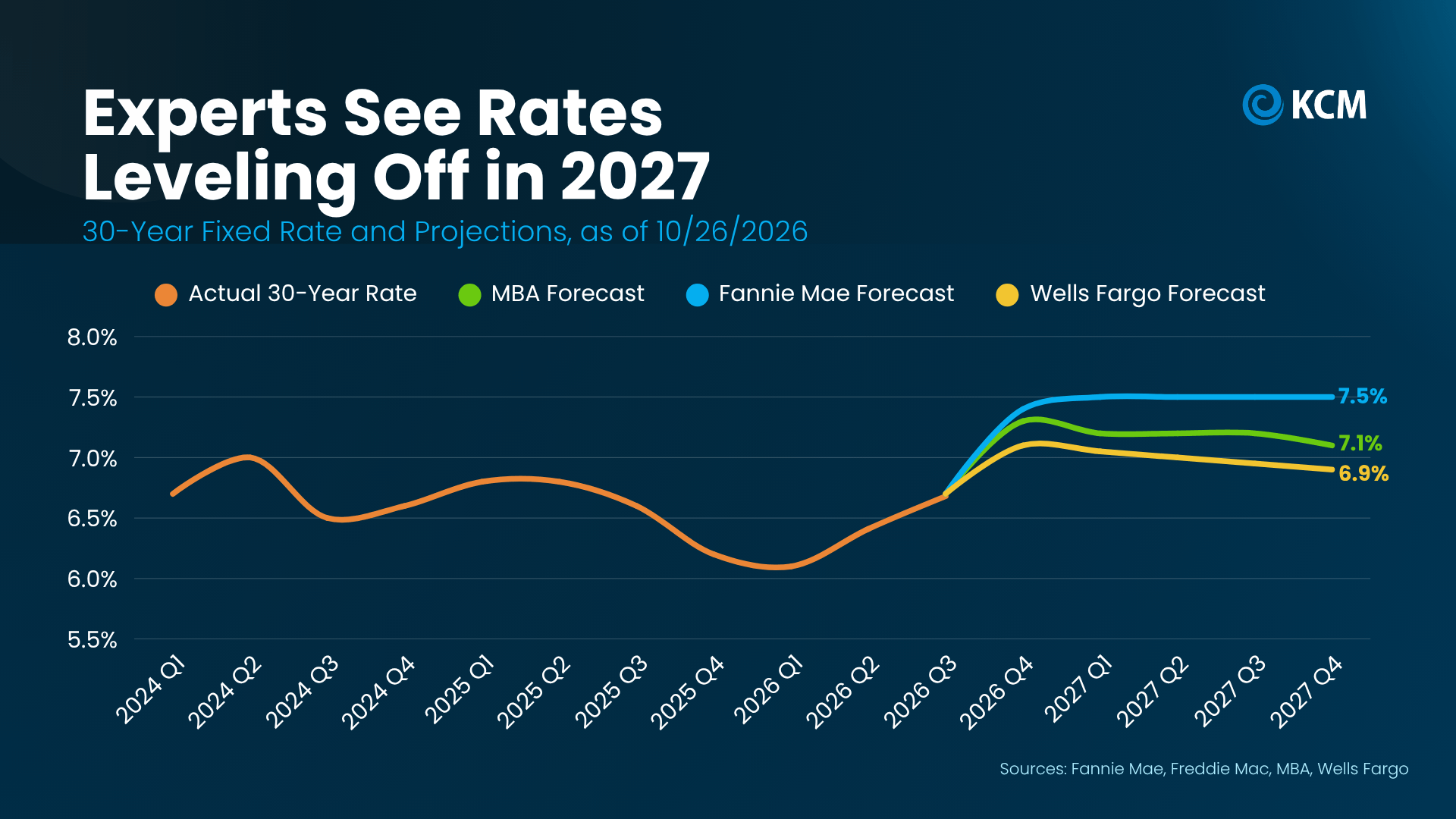
When experts look ahead to 2027, they see a steady housing market. No wild swings. No big surprises. Just a calmer, more balanced market.

And steady makes planning a whole lot easier. Let’s break it down.

Rates Are Expected To Settle into a Steady Range

Lots of people are holding out for lower rates. But the latest forecasts from Fannie Mae, the Mortgage Bankers Association (MBA), and Wells Fargo show rates holding fairly flat through 2027 (see graph below):

a graph of a graph showing the number of the same time

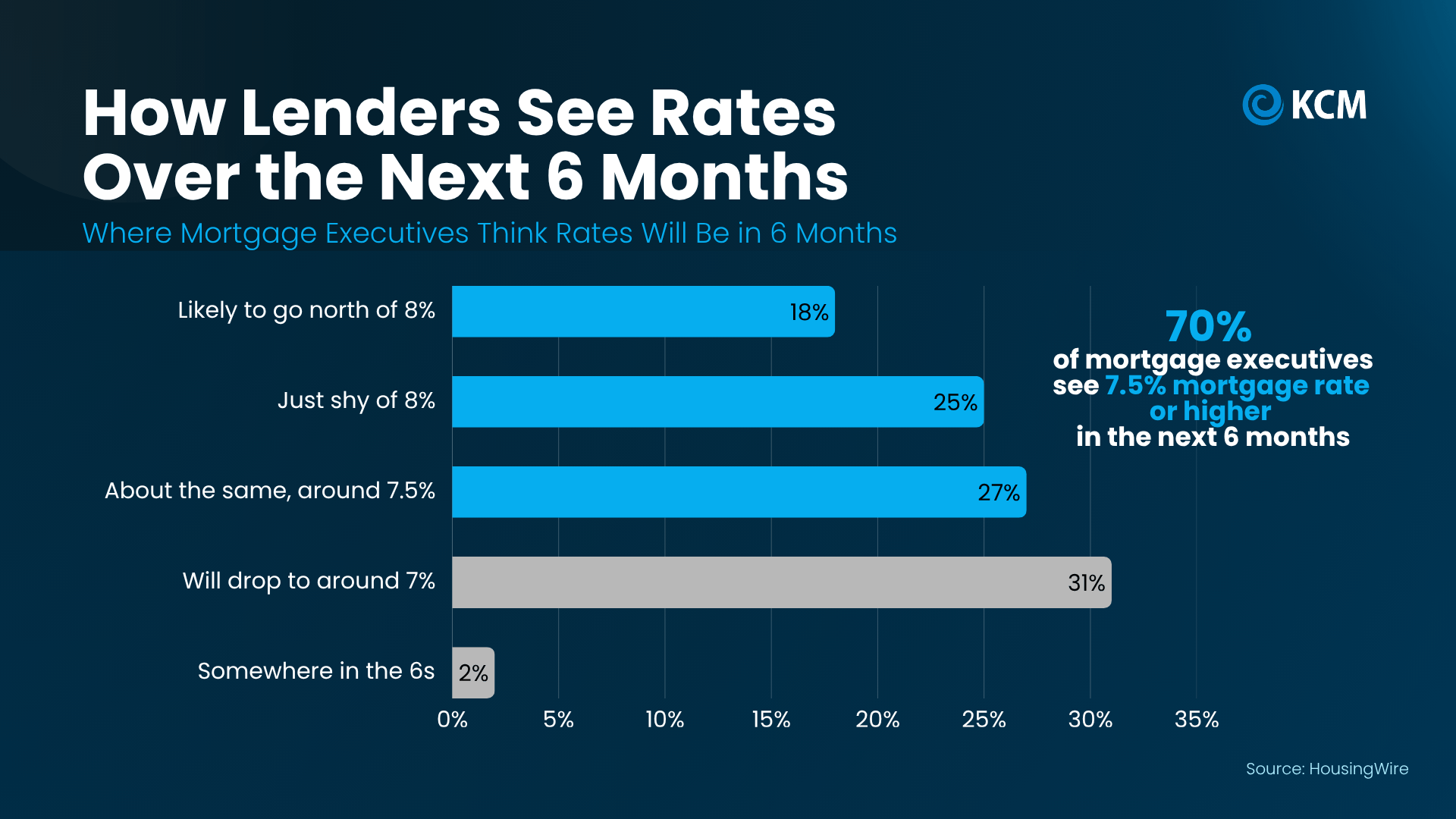
Lenders see it the same way. In a recent survey from HousingWire, 70% of mortgage executives said they expect rates to be around 7.5% or higher six months from now (see graph below):

a graph of percentages and numbers

And if you’re wondering why, the answer is fairly simple. Chen Zhao, Head of Economics Research at Redfin, says:

“Until the underlying economic fundamentals—everything from oil prices to AI–that are keeping rates high change, mortgage rates are unlikely to fall significantly.”

So what does that mean for you? Instead of trying to guess where rates go next, focus on what you can control. Even if rates don’t budge, there are still ways to get the best rate possible. When you talk with your lender, ask about:

  • Your credit score. Even a small bump in your score could help lower your rate.

  • Different loan types. Some programs offer lower rates or smaller down payments than you might expect.

  • Buying down your rate. Paying a little more upfront (called “points”) can lower your rate and your monthly payment.

That way, you’ll know exactly where you stand and what a comfortable monthly payment looks like for you. 

Prices Should Keep Climbing, Just More Slowly

But what about prices? Here’s where steady really works in your favor. 

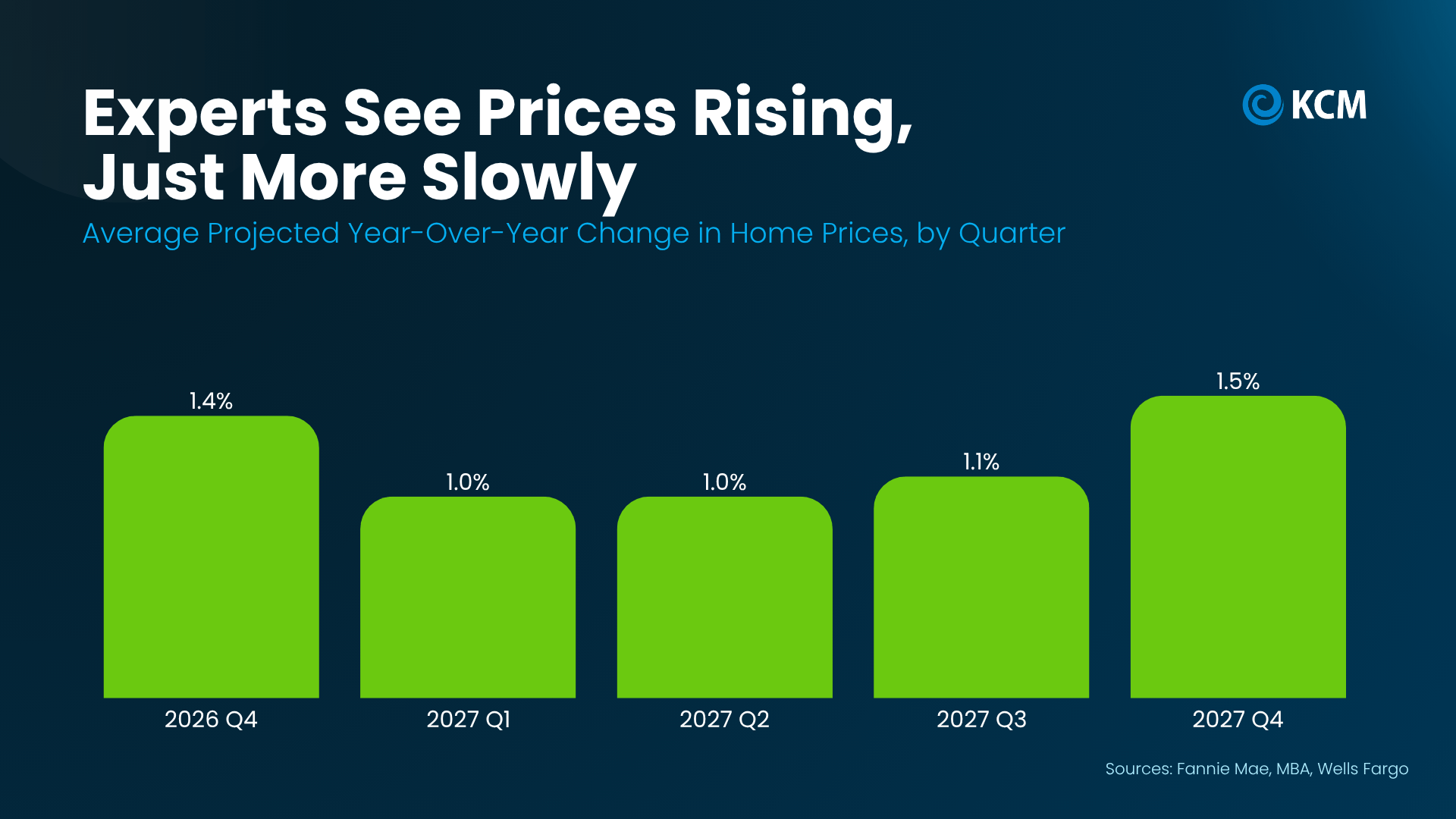
Experts don’t see a home price drop coming. On average, forecasts from Fannie Mae, MBA, and Wells Fargo show prices rising about 1% to 1.5% a year through 2027 (see graph below):

a graph of a number of green squares

In plain terms, in most places prices are still going up, just not as fast. For sellers, that means your home should hold onto its value. For buyers, slower growth gives you a little more breathing room. Just don’t count on prices getting cheaper while you wait.

But keep in mind, these are national forecasts. Prices can look very different from one area to the next, so what matters most is what’s happening where you live.

The Best Time To Move Is When It Fits Your Life

When the market is steady, you don’t have to try to time it perfectly. There’s no big swing to wait out.

That puts the focus back on you. Maybe you need more space for a growing family. Maybe you’re ready for less upkeep. A steady market makes it easier to plan for either one.

Bottom Line

If you’re asking yourself should you move now or wait? You should know experts see a steady market through 2027, with rates holding near today’s levels and prices rising slowly. 

So, rather than waiting for a big shift that may not come, connect with a local real estate agent and run the numbers on what a move looks like at today’s rates and prices, so you can decide based on your goals instead of the headlines.

Credit Scoring Is Changing: 3 Things Homebuyers Should Know

Posted by
Credit Scoring Is Changing: 3 Things Homebuyers Should Know Simplifying The Market

Quick, what credit score do you need to buy a home? If a number pops into your head, there’s a pretty good chance it’s wrong. And the right answer is getting harder to pin down, because the way credit scores are determined and delivered is changing – for the better.

Here’s what you need to know in today’s changing credit climate.

#1  Most People Are Guessing 

Fannie Mae has been tracking consumer perceptions about mortgage requirements since 2015 and found that consumers consistently overestimated the minimum credit score lenders required to qualify for a mortgage. As recently as 2023, the average guess was 652.

In reality, the long-standing benchmark for loans backed by Fannie Mae and Freddie Mac is lower, at 620, and today even that isn’t a hard rule for every mortgage they back. 

Like the Fannie Mae research, a recent survey from Veterans United found consumers continue to overestimate what it takes to qualify for a home loan:

a blue and white survey

The takeaway? Guessing wrong can cost you. 

A renter who assumes their score is too low and they can’t qualify for a mortgage may never take steps to find out for sure.

#2  Credit Rules Are Changing

For decades, the mortgage industry relied on one set of scores – Classic FICO. Thanks to a push to promote competition, make credit scoring more inclusive, and help more Americans become homeowners, the Federal Housing Finance Agency (FHFA) has approved the use of new credit score models such as FICO 10T and VantageScore 4.0.

A different model can mean a different number for the same person. VantageScore says its model can score about 33 million adults that the Classic FICO’s model can’t. So the score you saw on an app last month may not be the one your lender pulls.

Remember: the models may be new, but the basics haven’t changed.

#3  Do Your Part And Partner With A Pro

Your credit score is important – no matter how it’s measured. Following the same basic rules will benefit your profile in the old and new score models:

a screen shot of a credit checklist

Because while credit models may change, the general advice for you to improve your score doesn’t. Financial awareness and consistency mixed with a little willpower can go a long way.

Bottom Line

Don’t make credit or homebuying decisions from a chart, an app, or a friend’s advice. With the rules shifting and so many misconceptions out there, it’s never too early to talk to a professional loan officer for advice on credit, budgeting, and what it would take to qualify for a mortgage.

You may be closer to owning a home than you think.

Why More Buyers Are Turning To Adjustable-Rate Mortgages Today

Posted by
Why More Buyers Are Turning To Adjustable-Rate Mortgages Today Simplifying The Market

When mortgage rates climb, buying a home can start to feel like trying to hit a moving target. Every jump in rates makes monthly payments bigger, and that pushes a lot of buyers to look for another way in.

More and more of them are finding it in the adjustable-rate mortgage, or ARM.

The ARM Option  

Here’s how an ARM differs from a more traditional mortgage. With a regular fixed-rate mortgage, your rate stays the same for your whole loan. But with an ARM, your rate is locked for the first few years, then it can move up or down based on market conditions.

Some people don’t like that level of uncertainty – and that’s okay. But others are drawn to this option specifically because there’s usually a lower rate to start when you opt for an ARM. And in an affordability-strapped market, that’s going to gain popularity. 

Bankrate recently found that, in September, rates for ARM products were over a full percentage point lower than a regular fixed-rate loan. Depending on the ARM product, that can make a difference of $150-300 in the monthly payment on a median-priced home. 

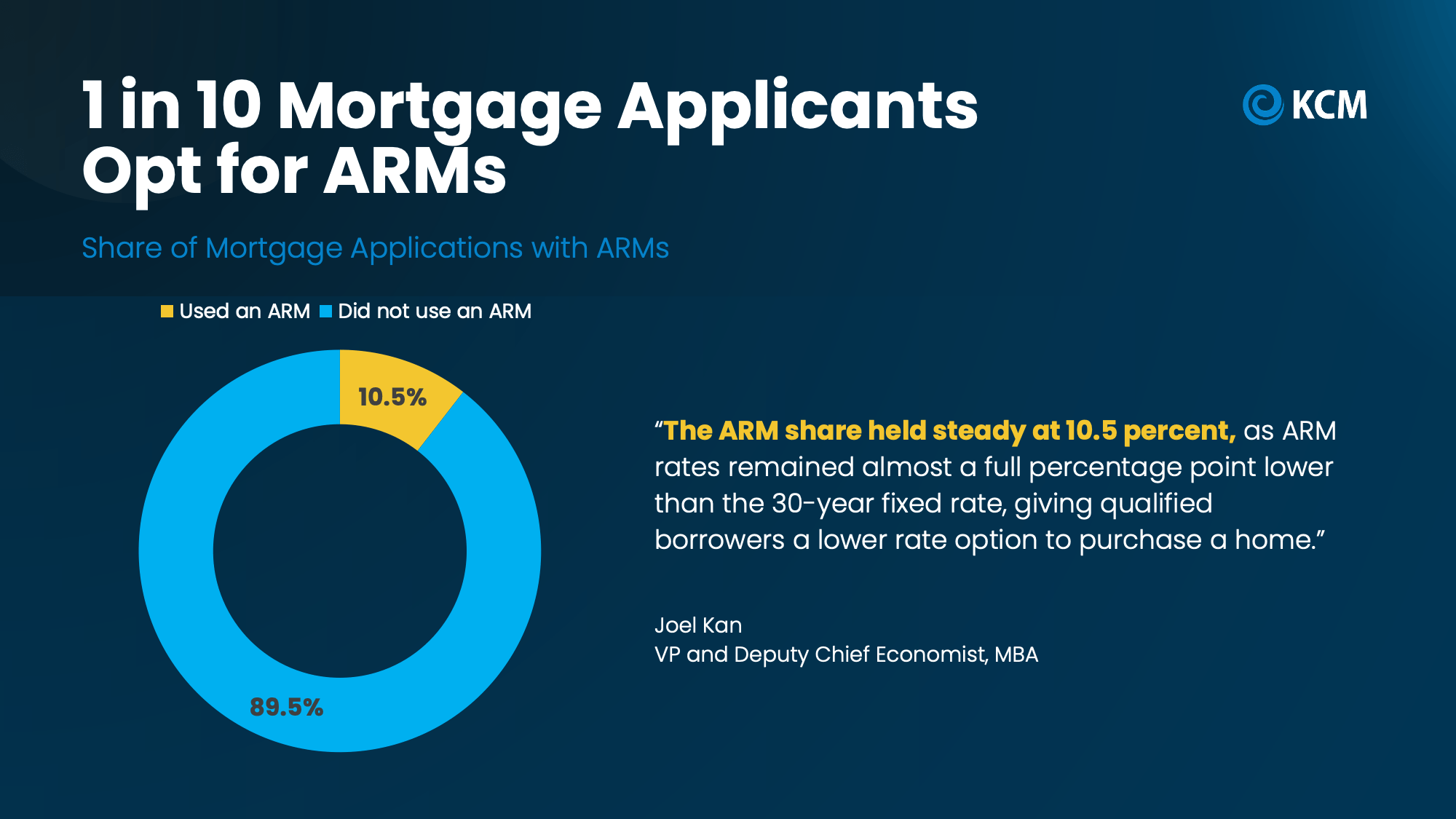
And for some buyers, that’s enough to turn “not right now” into “let’s do this.” You can see it in the numbers. Data from the Mortgage Bankers Association (MBA) shows that, in October, roughly 1 in 10 people applying for a mortgage chose an ARM (see graph below):

a blue pie chart with text

If you think you may want to consider this yourself, here’s what you need to know about how it works.

The 5/1 ARM

An ARM is like a phone or cable plan that has an introductory deal for new customers. You start out at a lower price, and then it adjusts after a specified amount of time. A popular loan is the 5/1 ARM.

The “5” means your introductory rate is locked for the first five years, and the “1” means that the rate can change every year after that. The rate change is called the “reset.” And here’s the really important part.

When your rate resets, your mortgage payment could go up or down. The good news is that most ARMs have caps, which are limits on how much your rate can rise each year and over the life of the loan. But either way, you have to be ready. 

The Upsides and Potential Downsides

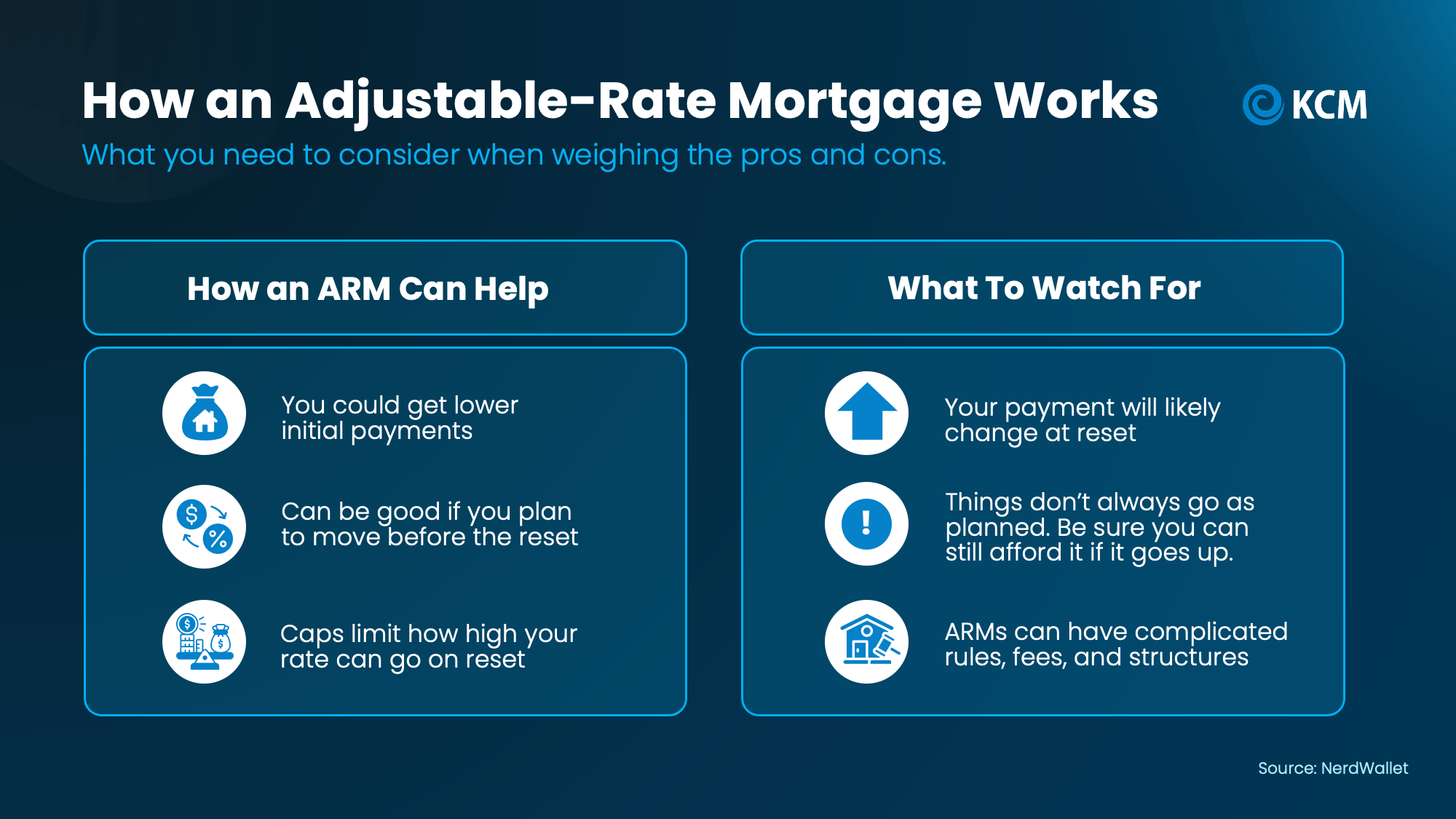
To see if this type of loan may be right for you, here are some things to think about and discuss with your loan officer:

a blue and white rectangular box with white text

Before you decide, ask your lender to work up the numbers and walk you through the different potential scenarios you could run into with an ARM. That way, you go in with your eyes open.

Be Ready for the Reset

And, if you do go with an adjustable-rate mortgage, just know that you’ll have choices when the reset time arrives. You could:

  • Do nothing and keep your loan in place if the new payment still fits your budget.

  • Refinance into a fixed-rate loan with a payment that never changes.

  • Refinance into another ARM with a new lower rate locked for a specified timeframe.

  • Sell your home.

  • Talk to the loan servicer about assistance or modification.

Remember, a refinance is a brand-new loan that you’ll have to qualify for – even if it’s on a home you already own. So, keep tabs on your credit and debt levels and ask your loan officer how major financial moves like job changes and major purchases will affect your mortgage readiness. It’s important to keep your credit and finances in “mortgage shape.”

Today’s ARMs Aren’t Like 2008

One more quick note. ARMs got a bad name after the financial crisis of 2008. Back then, there were some risky loans with small starting payments that later shot way up. Others let people borrow without proving how much money they earned.

But now, there are new laws to protect both borrowers and lenders. The biggest change is the Ability-to-Repay Rule, which says that before a lender makes a home loan, it has to check real paperwork (like pay stubs, W-2 forms, and tax returns) to make sure you can afford it. The lender also has to look at what your payment could be after the reset, not just the low starting payment. 

So, you don’t have to worry that today’s ARMs are the same as the ones we saw back during the crash.

Bottom Line

Today’s market has more options than many people realize. Finding the right one could be as simple as getting more information about tools like ARMs. A trusted lender can run the numbers with you, walk you through the what-ifs, and help you explore the possibilities.

Is an ARM a good option for you? Talk to a loan officer to find out.