910-279-9398 Download Our Brochure
  • Homes for sale in coastal southeastern NC

Archive for the ‘First Time Home Buyers’ Category

Reasons to Hire a Real Estate Professional [INFOGRAPHIC]

Posted by

Reasons to Hire a Real Estate Professional [INFOGRAPHIC] | Simplifying The Market

Reasons to Hire a Real Estate Professional [INFOGRAPHIC] | Simplifying The Market

Some Highlights

  • Choosing the right real estate professional to work with is one of the most important decisions you can make in your homebuying or selling process.
  • The right agent can explain current market conditions and break down exactly what they mean for you.
  • If you’re considering buying or selling a home this year, let’s connect so you can work with someone who has the experience to answer all of your questions about pricing, contracts, negotiations, and more.

The Importance of Home Equity in Building Wealth

Posted by

The Importance of Home Equity in Building Family Wealth | Simplifying The Market

Homeownership has always been the first rung on the ladder leading to household wealth. As Freddie Mac recently posted:

“Homeownership has cemented its role as part of the American Dream, providing families with a place that is their own and an avenue for building wealth over time. This ‘wealth’ is built, in large part, through the creation of equity…Building equity through your monthly principal payments and appreciation is a critical part of homeownership that can help you create financial stability.”

Home equity is the difference between the current market value of your house and the amount you currently owe on your mortgage. To estimate your equity, subtract your mortgage balance from the market value of your home.

You can find what you owe on your mortgage by looking at your last monthly statement or by contacting your lender. If you need help determining the current market value of your home, contact a local real estate professional.

Is homeownership truly a better path to wealth than renting?

Some argue that renting eliminates the cost of property taxes and home repairs. Every potential renter must realize that all the expenses the landlord incurs (property taxes, repairs, insurance, etc.) are already baked into the rent payment – along with a profit margin. You don’t save money by renting.

As proof of this, First American broke down the net worth of homeowners and renters by income categories. Here are their findings:The Importance of Home Equity in Building Wealth | Simplifying The MarketOnly one income category ($127-192K) has a higher net worth for renters over homeowners. Every other category shows that being a homeowner leads to greater accumulated wealth.

According to the latest Homeowner Equity Insights Report from CoreLogic, the average homeowner gained $17,000 in equity in just the last year. Here’s a breakdown of the year-over-year equity gain by state:The Importance of Home Equity in Building Wealth | Simplifying The Market

When can you cash in on your housing wealth?

Your home equity is part of your total wealth as a homeowner. The two most common ways homeowners can leverage their wealth are:

  • Selling
  • Refinancing

Selling: When you decide to sell your home, the equity you’ve built over time will come back to you in the sale. For example, if you paid off your $200,000 mortgage and sold your home for $350,000, you would receive $150,000 after closing.

Refinancing: You can refinance your current mortgage and take out some of the equity you have accumulated. With today’s historically low mortgage rates, you may be able to take out substantial cash and keep your monthly payment the same. Thankfully, homeowners today are doing this responsibly and not repeating the same mistakes made in 2006-2008 when some cashed out their entire equity to purchase luxury items like new cars, lavish vacations, etc.

How can these options help homeowners?

During these difficult times, many households are struggling with their housing expenses. Homeowners, because of their equity, have better alternatives. Odeta Kushi, Deputy Chief Economist at First American, recently explained that homeowners financially impacted by the pandemic will not necessarily be faced with foreclosure:

“The foreclosure process is based on two steps. First, the homeowner suffers an adverse economic shock…leading to the homeowner becoming delinquent on their mortgage. However, delinquency by itself is not enough to send a mortgage into foreclosure. With enough equity, a homeowner has the option of selling their home, or tapping into their equity through a refinance, to help weather the economic shock.”

What might the future bring?

Most experts are calling for home prices to continue appreciating going forward. The Home Price Expectation Survey, a survey of a national panel of over one hundred economists, real estate experts, and investment & market strategists, indicates appreciation will continue for at least the next five years. Using their annual projections, the graph below shows the equity build-up a purchaser would potentially earn by buying a $300,000 home this January:The Importance of Home Equity in Building Wealth | Simplifying The Market
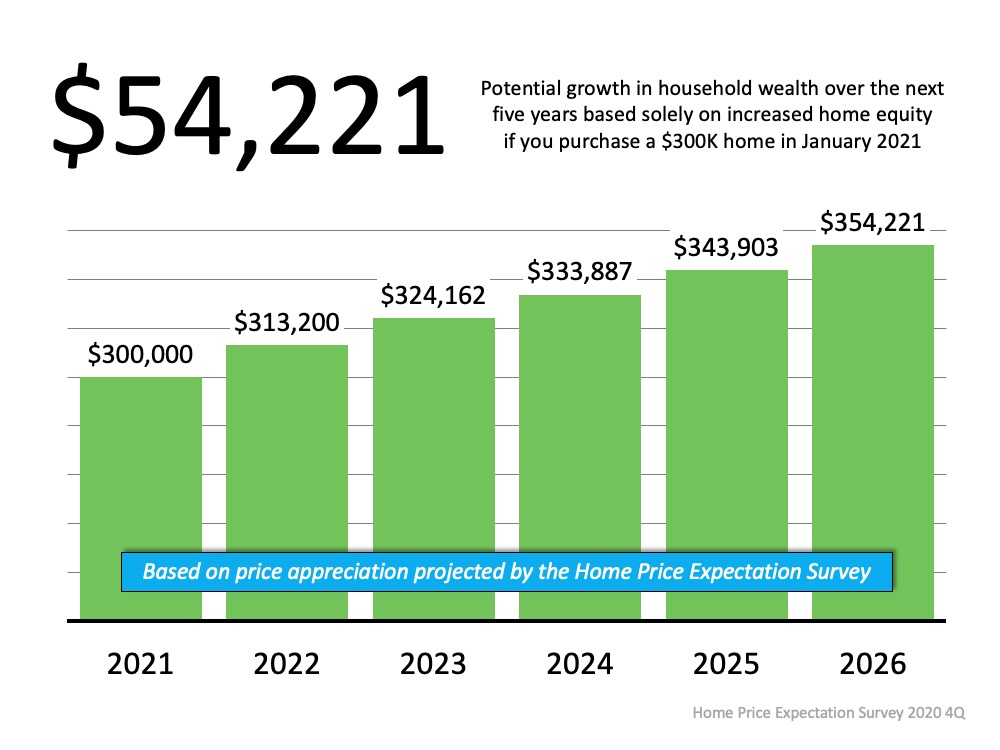
Bottom Line

Home equity, for most Americans, is the quickest way to build household wealth. That wealth gives homeowners more options during good times and in difficult situations.

Why Not to Wait Until Spring to Make a Move

Posted by

Why Not to Wait Until Spring to Make a Move | Simplifying The Market

The housing market recovery coming into the new year has been nothing short of remarkable. Many experts agree the turnaround from the nation’s economic pause is playing out extremely well for real estate, and the current market conditions are truly making this winter an ideal time to make a move. Here’s a dive into some of the biggest wins for homebuyers this season.

1. Mortgage Rates Are Historically Low

In 2020, mortgage rates hit all-time lows 16 times. Continued low rates have set buyers up for significant long-term gains. In fact, realtor.com notes:

“Given this means homes could cost potentially tens of thousands less over the lifetime of the loan.”

Essentially, it’s less expensive to borrow money for a home loan today than it has been in years past. Although mortgage rates are expected to remain relatively low in 2021, even the slightest increase can make a big difference in your payments over the lifetime of a home loan. So, this is a huge opportunity to capitalize on right now before mortgage rates start to rise.

2. Equity Is Growing

According to John Burns Consulting, 58.7% of homes in the U.S. have at least 60% equity, and 42.1% of all homes in this country are mortgage-free, meaning they’re owned free and clear.

In addition, CoreLogic notes the average equity homeowners gained since last year is $17,000. That’s a tremendous amount of forced savings for homeowners, and an opportunity to use this increasing equity to make a move into a home that fits your changing needs this season.

3. Home Prices Are Appreciating

According to leading experts, home prices are forecasted to continue appreciating. Today, many experts are projecting more moderate home price growth than last year, but still moving in an upward direction through 2021.

Knowing home values are increasing while mortgage rates are so low should help you feel confident that buying a home before prices rise even higher is a strong long-term investment.

4. There Are Not Enough Homes for Sale

With today’s low inventory of homes on the market, which is contributing to this home price appreciation, sellers are in the driver’s seat. The competition is high among buyers, so homes are selling quickly.

Making a move while so many buyers are looking for homes to purchase may mean your house rises to the top of the buyer pool. Selling your house before more listings come to the market in the traditionally busy spring market might be your best chance to shine.

Bottom Line

If you’re considering making a move, this may be your moment, especially with today’s low mortgage rates and limited inventory. Let’s connect to get you set up for homebuying success in the new year.

Turning a House into a Happy Home

Posted by

Turning a House into a Happy Home | Simplifying The Market

We talk a lot about why it makes financial sense to buy a home, but more often than not, we’re drawn to the emotional reasons for homeownership.

No matter the living space, the feeling of a home means different things to different people. Whether it’s a certain scent or a favorite chair, the feel-good connections to our own homes are typically more important to us than the financial ones. Here are some of the reasons why.

1. Owning your home is an accomplishment worth celebrating

You’ve likely worked very hard to achieve this dream, and whether it’s your first home or your fifth, congratulations are in order for this milestone. You’ve earned it.

2. There’s no place like home

Owning your own home offers not only safety and security but also a comfortable place where you can simply relax and kick-back after a long day. Sometimes, that’s just what we need to feel recharged and truly content.

3. You can find more space to meet your needs

Whether you want more room in your home for your changing lifestyle (think: working from home, virtual school, or a personal gym), or you simply prefer to have a large backyard for socially-distant entertaining, you can invest in a location that truly works for your evolving needs.

4. You have control over renovations, updates, and your style

Looking to try one of those complicated wall treatments you saw on Pinterest? Tired of paying an additional pet deposit for your apartment building? Maybe you want to finally adopt that fur-baby puppy or kitten you’ve been hoping for. You can do all of these things in your own home.

Bottom Line

Whether you’re a first-time homebuyer or a move-up buyer who wants to start a new chapter in your life, now is a great time to reflect on the intangible factors that turn a house into a happy home.

The Difference a Year Makes for Homeownership

Posted by

The Difference a Year Makes for Homeownership | Simplifying The Market

Over the past year, mortgage rates have fallen more than a full percentage point, hitting a new historic low 15 times. This is a great driver for homeownership, as today’s low rates provide consumers with some significant benefits. Here’s a look at three of them.

1. Move-up or Downsize: One option is to consider moving into a new home, putting the equity you’ve likely gained in your current house toward a down payment on a new one that better meets your needs – something that’s truly a perfect fit, especially if your lifestyle has changed this year.

2. Become a First-Time Homebuyer: There are many financial and non-financial benefits to owning a home, and the most important thing is to first decide when the time is right for you. You have to determine that on your own, but know that now is a great time to buy if you’re considering it. Just take a look at the cost of renting vs. buying.

3. Refinance: If you already own a home, you may decide you’re going to refinance. It’s one way to lock in a lower monthly payment and save more over time. However, it also means paying upfront closing costs, too. If you want to take this route, you have to answer the question: Should I refinance my home?

Why 2020 Was a Great Year for Homeownership

Last year, the average mortgage rate was 3.93% (substantially higher than it is today). If you waited for a better time to make a move, market conditions have improved significantly. Today’s low mortgage rates are a huge perk for buyers, so it’s a great time to get more for your money and consider a new home.

The chart below shows how much you would save per month based on today’s rates compared to what you would have paid if you purchased a home exactly one year ago, depending on how much you finance:The Difference a Year Makes for Homeownership | Simplifying The Market

Bottom Line

If you’ve been waiting since last year to make your move into homeownership or to find a house that better meets your needs, today’s low mortgage rates may be just what you need to get the process going. Let’s connect today to discuss how you may benefit from the current rates.

The Do’s and Don’ts after Applying for a Mortgage

Posted by

The Do’s and Don’ts after Applying for a Mortgage | Simplifying The Market

Once you’ve found the right home and applied for a mortgage, there are some key things to keep in mind before you close. You’re undoubtedly excited about the opportunity to decorate your new place, but before you make any large purchases, move your money around, or make any major life changes, consult your lender – someone who is qualified to tell you how your financial decisions may impact your home loan.

Below is a list of things you shouldn’t do after applying for a mortgage. They’re all important to know – or simply just good reminders – for the process.

1. Don’t Deposit Cash into Your Bank Accounts Before Speaking with Your Bank or Lender. Lenders need to source your money, and cash is not easily traceable. Before you deposit any amount of cash into your accounts, discuss the proper way to document your transactions with your loan officer.

2. Don’t Make Any Large Purchases Like a New Car or Furniture for Your New Home. New debt comes with new monthly obligations. New obligations create new qualifications. People with new debt have higher debt-to-income ratios. Higher ratios make for riskier loans, and then sometimes qualified borrowers no longer qualify.

3. Don’t Co-Sign Other Loans for Anyone. When you co-sign, you’re obligated. With that obligation comes higher ratios as well. Even if you promise you won’t be the one making the payments, your lender will have to count the payments against you.

4. Don’t Change Bank Accounts. Remember, lenders need to source and track your assets. That task is significantly easier when there’s consistency among your accounts. Before you transfer any money, speak with your loan officer.

5. Don’t Apply for New Credit. It doesn’t matter whether it’s a new credit card or a new car. When you have your credit report run by organizations in multiple financial channels (mortgage, credit card, auto, etc.), your FICO® score will be impacted. Lower credit scores can determine your interest rate and maybe even your eligibility for approval.

6. Don’t Close Any Credit Accounts. Many buyers believe having less available credit makes them less risky and more likely to be approved. Wrong. A major component of your score is your length and depth of credit history (as opposed to just your payment history) and your total usage of credit as a percentage of available credit. Closing accounts has a negative impact on both of those determinants of your score.

Bottom Line

Any blip in income, assets, or credit should be reviewed and executed in a way that ensures your home loan can still be approved. If your job or employment status has changed recently, share that with your lender as well. The best plan is to fully disclose and discuss your intentions with your loan officer before you do anything financial in nature.

Winning as a Buyer in a Sellers’ Market [INFOGRAPHIC]

Posted by

Winning as a Buyer in a Sellers’ Market [INFOGRAPHIC] | Simplifying The Market

Winning as a Buyer in a Sellers’ Market [INFOGRAPHIC] | Simplifying The Market

Some Highlights

  • Buying a home in today’s sellers’ market doesn’t have to feel like an uphill battle.
  • Here are four ways to make sure you’re positioned for success when making a home purchase, even when the scale tips toward sellers.
  • Let’s connect to make sure you’re armed for victory in the housing market this season.

The Path to Homeownership [INFOGRAPHIC]

Posted by

The Path to Homeownership [INFOGRAPHIC] | Simplifying The Market

The Path to Homeownership [INFOGRAPHIC] | Simplifying The Market

Some Highlights

  • If you’re thinking of buying a home and not sure where to start, you’re not alone.
  • Here’s a map with 10 simple steps to follow in the homebuying process.
  • Let’s connect today to discuss the specific steps along the way in our local area.

Knowledge Is Power on the Path to Homeownership

Posted by

Knowledge Is Power on the Path to Homeownership | Simplifying The Market

Homeownership is on the goal list for many young adults, but sometimes it’s hard to know exactly how to get there. From understanding the homebuying process to pre-approval and down payment assistance options, uncertainty along the way can ultimately hold some buyers back.

Today, there are over 75 million Millennials and 67 million Gen Z’ers in the U.S., making up a significant number of both current and soon-to-be homebuyers. According to a recent Fannie Mae survey of more than 2,000 of these individuals:

“88% said they are confident they will achieve homeownership someday.”

In addition, the survey also reveals that for younger generations, the motivation to own a home may be more emotional than financial compared to previous generations:

  • <50% say they want to use their home as an asset
  • 78% believe it’s the best way to live the way they want, without restrictions
  • 80% believe homeownership is the best way to make it on their own

Whether homeownership goals come from the heart or are driven by financial aspirations (or maybe both), the obstacles standing in the way don’t have to bring these dreams to a screeching halt. The same survey also reveals two key roadblocks for potential buyers. Thankfully, they’re both easily overcome with the power of knowledge and trusted advisors leading the way. Here’s a look at these two challenges potential homebuyers face today:

1. 73% of future homebuyers are unaware of low-down-payment mortgage options

For those who want to purchase a home, low-down-payment options are instrumental to affording one sooner rather than later, especially given the amount of debt many younger adults have accumulated. Fannie Mae also notes:

“Among the challenges they face is an unprecedented amount of debt, along with a lack of understanding of the mortgage process and their own purchasing power. Debt, in particular, creates many obstacles such as a limited ability to save and the fear of taking on more debt.”

Today, there are more than 2,340 down payment assistance programs available nationwide to help relieve this pressure. Understanding what’s out there and the options available may help many buyers become homeowners faster than they thought possible. In a year like this, with record-low mortgage rates making their mark in the history books, being able to take advantage of the opportunity buyers have right now is essential to long-term affordability.

2. 64% of buyers expect lenders and other real estate professionals to educate them about the mortgage process

While many people love to do a quick search online to find instant answers to their questions, it isn’t the only way younger generations want to consume information or build their knowledge base. As the survey mentions, having trusted professionals help them learn what it takes to achieve their dreams is definitely on their wish list too.

Bottom Line

If you’re aiming for homeownership someday, it may be in closer reach than you think. Let’s connect so you can learn about the process and get the guidance you need to make it happen.

5 Tips for Homebuyers Who Want to Make a Competitive Offer

Posted by

5 Tips for Homebuyers Who Want to Make a Competitive Offer | Simplifying The Market

Today’s real estate market has high buyer interest and low housing inventory. With so many buyers competing for a limited number of homes, it’s more important than ever to know the ins and outs of making a confident and competitive offer. Here are five keys to success for this important stage in the homebuying process.

1. Listen to Your Real Estate Agent

A recent article from Freddie Mac offers guidance on making an offer on a home in today’s market. Right off the bat, it points out how emotional this can be for buyers and why trusted professionals can help you stay focused on the most important things:

“Remember to let your homebuying team guide you on your journey, not your emotions. Their support and expertise will keep you from compromising on your must-haves and future financial stability.”

Your real estate professional should be your primary source for answers to the questions you have when you’re ready to make an offer.

2. Understand Your Finances

Having a complete understanding of your budget and how much house you can afford is essential. The best way to know this is to reach out to your lender to get pre-approved for a loan early in the homebuying process. Only 44% of today’s prospective homebuyers are planning to apply for pre-approval, so be sure to take this step so you stand out from the crowd. It shows sellers you’re a serious, qualified buyer and can give you a competitive edge if you enter a bidding war.

3. Be Ready to Move Quickly

According to the Realtors Confidence Index, published monthly by the National Association of Realtors (NAR), the average property being sold today is receiving more than three offers and is only on the market for a few weeks. These are both results of today’s competitive market, showing how important it is to stay agile and vigilant in your search. As soon as you find the right home for your needs, be prepared to work with your agent to submit an offer as quickly as possible.

4. Make a Fair Offer

It’s only natural to want the best deal you can get on a home. However, Freddie Mac also warns that submitting an offer that’s too low can lead sellers to doubt how serious you are as a buyer. Don’t submit an offer that will be tossed out as soon as it’s received. The expertise your agent brings to this part of the process will help you stay competitive:

“Your agent will work with you to make an informed offer based on the market value of the home, the condition of the home and recent home sale prices in the area.”

5. Be a Flexible Negotiator

After submitting an offer, the seller may accept it, reject it, or counter it with their own changes. In a competitive market, it’s important to stay nimble throughout the negotiation process. Your position can be strengthened with an offer that includes flexible move-in dates, a higher price, or minimal contingencies (conditions you set that the seller must meet for the purchase to be finalized). There are, however, certain contingencies you don’t want to forego. Freddie Mac explains:

Resist the temptation to waive the inspection contingency, especially in a hot market or if the home is being sold ‘as-is’, which means the seller won’t pay for repairs. Without an inspection contingency, you could be stuck with a contract on a house you can’t afford to fix.”

Bottom Line

Today’s competitive market makes it more important than ever to make a strong offer on a home, and a trusted expert can help you rise to the top along the way.