

910-279-9398 Download Our Brochure
  • Homes for sale in coastal southeastern NC

Archive for the ‘Move-Up Buyers’ Category

Diving Deep into Today’s Biggest Buyer Concerns

Posted by

Diving Deep into Today’s Biggest Buyer Concerns | Simplifying The Market

Last week, Fannie Mae released their Home Purchase Sentiment Index (HPSI). Though the survey showed 77% of respondents believe it’s a “good time to sell,” it also confirms what many are sensing: an increasing number of Americans believe it’s a “bad time to buy” a home. The percentage of those surveyed saying it’s a “bad time to buy” hit 64%, up from 56% last month and 38% last July.

The latest HPSI explains:

“Consumers also continued to cite high home prices as the predominant reason for their ongoing and significant divergence in sentiment toward homebuying and home-selling conditions. While all surveyed segments have expressed greater negativity toward homebuying over the last few months, renters who say they are planning to buy a home in the next few years have demonstrated an even steeper decline in homebuying sentiment than homeowners. It’s likely that affordability concerns are more greatly affecting those who aspire to be first-time homeowners than other consumer segments.”

Let’s look closely at the market conditions that impact home affordability.

A mortgage payment is determined by the price of the home and the mortgage rate on the loan used to purchase it. Lately, monthly mortgage payments have gone up for buyers for two key reasons:

  1. Mortgage rates have increased from 2.65% this past January to 2.9%.
  2. Home prices have increased by 15.4% over the last 12 months.

Based on these rising factors, a home may be less affordable today, but it doesn’t mean it’s not affordable.

Three weeks ago, ATTOM Data released their second-quarter 2021 U.S. Home Affordability Report which explained that the major ownership costs on the typical home as a percent of the average national wage had increased from 22.2% in the second quarter of 2020 to 25.2% in the second quarter of this year. They also went on to explain:

“Still, the latest level is within the 28 percent standard lenders prefer for how much homeowners should spend on mortgage payments, home insurance and property taxes.

In the same report, Todd Teta, Chief Product Officer with ATTOM, confirms:

Average workers across the country can still manage the major expenses of owning a home, based on lender standards.”

It’s true that monthly mortgage payments are greater than they were last year (as the ATTOM data shows), but they’re not unaffordable when compared to the last 30 years. While payments have increased dramatically during that several-decade span, if we adjust for inflation, today’s mortgage payments are 10.7% lower than they were in 1990.

What’s that mean for you? While you may not get the homebuying deal someone you know got last year, that doesn’t mean you shouldn’t still buy a home. Here are your alternatives to buying and the trade-offs you’ll have with each.

Alternative 1: I’ll rent instead.

Some may consider renting as the better option. However, the monthly cost of renting a home is skyrocketing. According to the July National Rent Report from Apartment List:

“…So far in 2021, rental prices have grown a staggering 9.2%. To put that in context, in previous years growth from January to June is usually just 2 to 3%. After this month’s spike, rents have been pushed well above our expectations of where they would have been had the pandemic not disrupted the market.”

If you continue to rent, chances are your rent will keep increasing at a fast pace. That means you could end up spending significantly more of your income on your rental as time goes on, which could make it even harder to save for a home.

Alternative 2: I’ll wait it out.

Others may consider waiting for another year and hoping that purchasing a home will be less expensive then. Let’s look at that possibility.

We’ve already established that a monthly mortgage payment is determined by the price of the home and the mortgage rate. A lower monthly payment would require one of those two elements to decrease over the next year. However, experts are forecasting the exact opposite:

  • The Mortgage Bankers Association (MBA) projects mortgage rates will be at 4.2% by the end of next year.
  • The Home Price Expectation Survey (HPES), a survey of over 100 economists, investment strategists, and housing market analysts, calls for home prices to increase by 5.12% in 2022.

Based on these projections, let’s see the possible impact on a monthly mortgage payment:Diving Deep into Today’s Biggest Buyer Concerns | Simplifying The MarketBy waiting until next year, you’d potentially pay more for the home, need a larger down payment, pay a higher mortgage rate, and pay an additional $3,696 each year over the life of the mortgage.

Bottom Line

While you may have missed the absolute best time to buy a home, waiting any longer may not make sense. Mark Fleming, Chief Economist at First American, says it best:

“Affordability is likely to worsen before it improves, so try to buy it now, if you can find it.”

4 Major Incentives To Sell This Summer

Posted by

4 Major Incentives To Sell This Summer | Simplifying The Market

While the housing market forecast for the second half of the year remains positive, there may not be a better time to sell than right now. Here are four things to consider if you’re trying to decide if now’s the right time to make a move.

1. Your House Will Likely Sell Quickly

According to the most recent Realtors Confidence Index released by the National Association of Realtors (NAR), homes continue to sell quickly. The report notes homes are selling in an average of just 17 days.

Average days on market is a strong indicator of buyer competition, and homes selling quickly is a great sign for sellers. It’s one of several factors that indicate buyers are motivated to do what it takes to purchase the home of their dreams.

2. Buyers Are Willing To Compete for Your House

In addition to selling fast, homes are receiving multiple offers. NAR reports sellers are seeing an average of 5 offers, and these offers are competitive ones. Shawn Telford, Chief Appraiser at CoreLogic, said in a recent interview:

The frequency of buyers being willing to pay more than the market data supports is increasing.

This confirms buyers are ready and willing to enter bidding wars for your home. Receiving several offers on your house means you can select the one that makes the most sense for your situation and financial well-being.

3. When Supply Is Low, Your House Is in the Spotlight

One of the most significant challenges for motivated buyers is the current inventory of homes for sale, which while improving, remains at near-record lows. As NAR details:

“Total housing inventory at the end of May amounted to 1.23 million units, up 7.0% from April’s inventory and down 20.6% from one year ago (1.55 million). Unsold inventory sits at a 2.5-month supply at the present sales pace, marginally up from April’s 2.4-month supply but down from 4.6-months in May 2020.”

There are signs, however, that more homes are coming to market. Odeta Kushi, Deputy Chief Economist at First American, notes:

“It looks like existing inventory is starting to inch up, which is good news for a housing market parched for more supply.

If you’re looking to take advantage of buyer demand and get the most attention for your house, selling now before more listings come to the market might be your best option.

4. If You’re Thinking of Moving Up, Now May Be the Time

Over the past 12 months, homeowners have gained a significant amount of wealth through growing equity. In that same period, homeowners have also spent a considerable amount of time in their homes, and many have decided their house doesn’t meet their needs.

If you’re not happy with your current home, you can leverage that equity to power your move now. Your equity, plus current low mortgage rates, can help you maximize your purchasing power.

But these near-historic low rates won’t last forever. Experts forecast interest rates will increase in the coming months. Nadia Evangelou, Senior Economist and Director of Forecasting at NAR, says:

“Nevertheless, as the economic outlook for the United States looks brighter for the rest of the year, mortgage rates are expected to rise in the following months.”

As interest rates rise, even modestly, it could influence buyer demand and your purchasing power. If you’ve been waiting for the best time to sell to fuel your move up, you likely won’t find more favorable conditions than those we’re seeing today.

Bottom Line

With supply challenges, low mortgage rates, and extremely motivated buyers, sellers are well-positioned to take advantage of current market conditions right now. If you’re thinking about selling, let’s connect today to discuss why it makes sense to list your home sooner rather than later.

Your Home Equity Can Take You Places [INFOGRAPHIC]

Posted by

Your Home Equity Can Take You Places [INFOGRAPHIC] | Simplifying The Market

Your Home Equity Can Take You Places [INFOGRAPHIC] | Simplifying The Market

Some Highlights

  • The amount of wealth Americans have stored in their homes has increased astronomically.
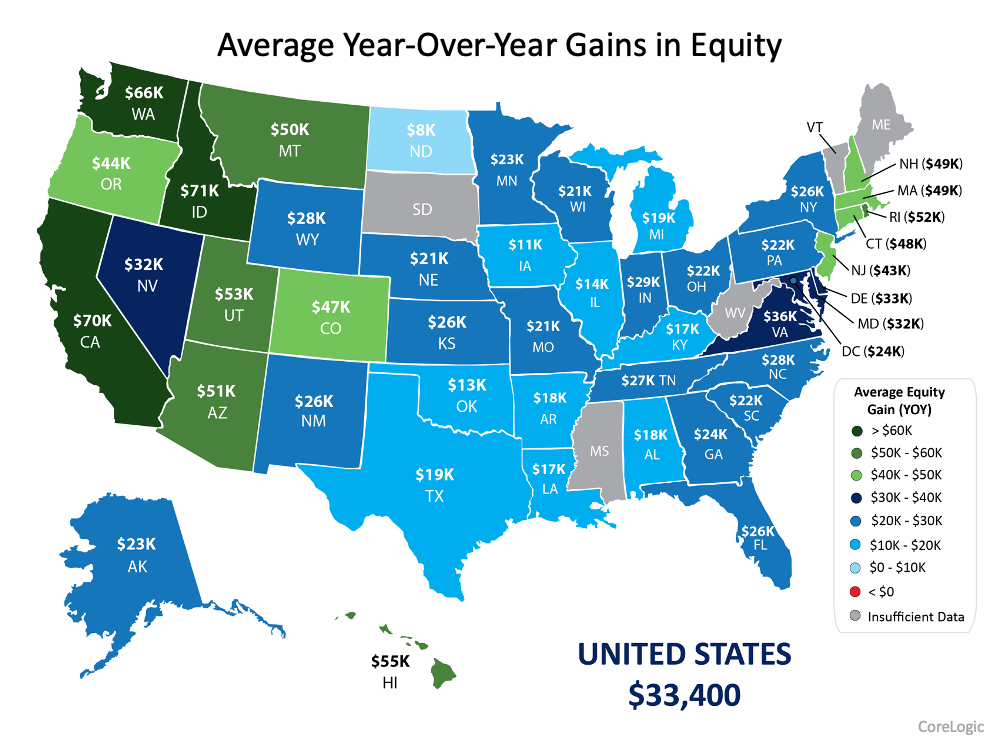
  • On average, homeowners gained $33,400 in equity over the last 12 months, and the average equity on mortgaged homes is now $216,000.
  • When it’s time to sell, your home equity can help accomplish your goals. Let’s connect to discuss how you can take advantage of today’s sellers’ market to get the most out of your home sale.

A Look at Home Price Appreciation Through 2025

Posted by

A Look at Home Price Appreciation Through 2025 | Simplifying The Market

Home prices have increased significantly over the last year, which in turn has grown the net worth of homeowners. Appreciation and home equity are directly linked – as the value of a home increases, so does a homeowner’s equity. And with these recent gains, homeowners are witnessing their financial stability and well-being grow to record levels.

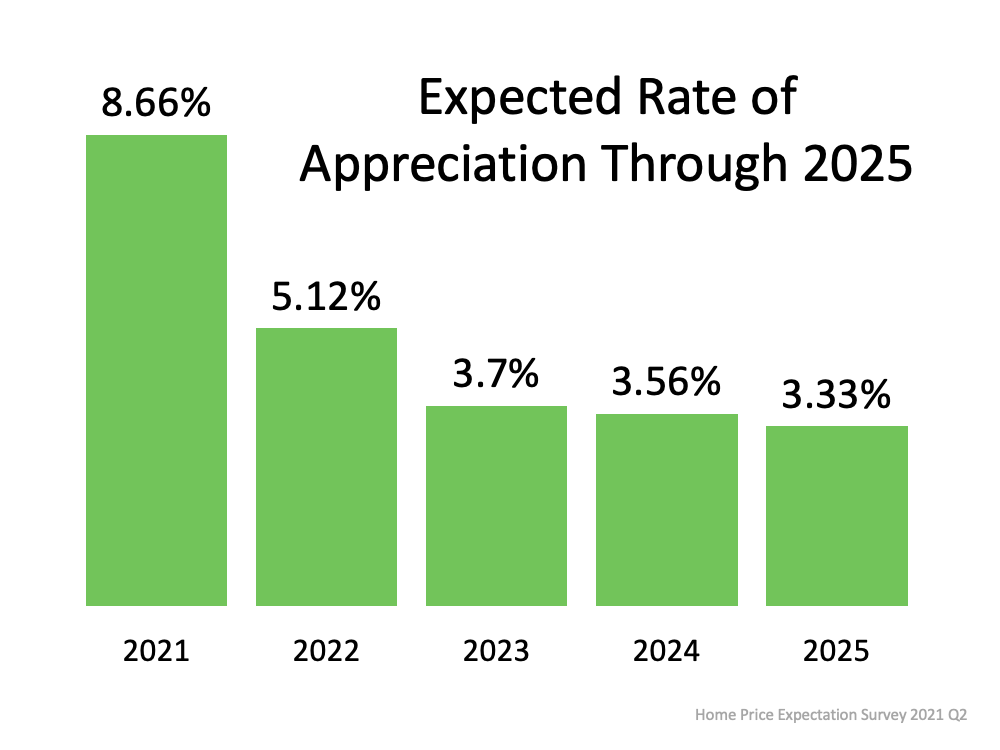
In more good news for homeowners, the most recent Home Price Expectations Survey – a survey of a national panel of over one hundred economists, real estate experts, and investment and market strategists – forecasts home prices will continue appreciating over the next five years, adding to the record amount of equity homeowners have already gained over the past year. Below are the expected year-over-year rates of home price appreciation from the report:A Look at Home Price Appreciation Through 2025 | Simplifying The Market

What Does This Mean for Homeowners?

Home prices are climbing today, and the data in the survey indicates they’ll continue to increase, but at rates that approach a more normal pace. Even still, the amount of household wealth a homeowner stands to earn going forward is substantial. This truly becomes clear when we consider a scenario using a median-priced home purchased in January of 2021 and the projected rate of appreciation on that home over the next five years. As the graph below illustrates, a homeowner could increase their net worth by a significant amount – over $93,000 dollars by 2026.A Look at Home Price Appreciation Through 2025 | Simplifying The Market

Home Price Appreciation and Home Equity

CoreLogic recently released their quarterly Homeowner Equity Insights Report, which tracks the year-over-year increases in equity. It shows an average annual gain of $33,400 per borrower over the past 12 months. In the report, Dr. Frank Nothaft, Chief Economist for CoreLogic, further explains:

Double-digit home price growth in the past year has bolstered home equity to a record amount. The national CoreLogic Home Price Index recorded an 11.4% rise in the year through March 2021, leading to a $216,000 increase in the average amount of equity held by homeowners with a mortgage.”

The expected, sustained growth of home prices means homeowners can continue to build on the past year’s record levels of home equity – and their financial prosperity. It also presents today’s homeowners with a unique opportunity: using their growing equity for a home upgrade. With so few homes available to purchase and strong buyer demand, there may not be a better time to sell your current house and move into one that better meets your needs.

Bottom Line

Home prices are expected to continue appreciating over the next five years, and the associated equity gains are the quickest way homeowners can build household wealth. If you’re a current homeowner who’s ready to take advantage of your built-up equity, let’s connect today to discuss your options.

Home Builders Ramp Up Construction Based on Demand

Posted by

Home Builders Ramp Up Construction Based on Demand | Simplifying the Market

If you’re thinking of buying a home, there really is no time like the present. With today’s low mortgage rates, you have a great opportunity to get more home for your money. The challenge is inventory. Like you, many buyers want to capitalize on these market conditions, and it’s leading to more buyer competition and bidding wars.

If you’re having a hard time finding a home to buy, it may be time to talk to your trusted real estate advisor about a newly built home. Early indicators show new-home construction is beginning to ramp up. While new homes alone won’t be able to fix all of the inventory challenges, this does mean you’ll soon have more options as you search for a home. As a buyer, a newly built home may be exactly what you’re looking for – it’s brand new, and with builder customization options, it’s uniquely yours from the ground up.

Here’s what industry experts are saying about new homes coming to market:

Nadia Evangelou, Senior Economist and Director of Forecasting at the National Association of Realtors (NAR), says recent research could indicate upward momentum when it comes to new home construction. Evangelou refers to the volume of new homes where construction began during a set period, known in the industry as housing starts.

According to that research, housing starts reached their highest level since 2006 in March of this year – an encouraging sign for the industry. While they dipped slightly in April, Evangelou reiterates that the level of housing construction is heading in a positive direction compared to recent years:

“…we are currently building 24% more homes than we typically have built in April in the last couple of decades. Thus, housing construction is trending upward with housing starts likely to reach 1.6 million for all of 2021 and rise further to 1.7 million in 2022.”

As new data pours in, it further confirms this trend. According to the latest Monthly New Residential Construction report from the U.S. Census Bureau, housing starts increased even more in May, which continues the ongoing upward trend (see graph below) and indicates that ground is being broken on even more new homes.Home Builders Ramp Up Construction Based on Demand | Simplifying the MarketRobert Dietz, Chief Economist and Senior Vice President of Economics and Housing Policy for the National Association of Home Builders (NAHB), singles out another encouraging sign:

“It is also worth noting that the number of single-family homes permitted but not started construction continued to increase in May, rising to 142,000 units.”

This insight that there’s also an uptick in single-family homes permitted serves as an additional sign that more new homes lie ahead. It’s important to realize that the construction doesn’t have to start on these homes before you may be able to purchase one. According to the Monthly New Residential Sales report from the U.S. Census Bureau, many new homes are selling before construction even begins (see graph below):Home Builders Ramp Up Construction Based on Demand | Simplifying the MarketThese signs are all good news for housing inventory. And as the recent challenges of rising lumber prices and dwindling lumber supply begin to improve, builders will be able to increase their production even more in the months ahead.

Bottom Line

While the inventory challenges we’re facing today won’t be solved overnight, the increase in new-home construction means your house may have more competition in the market. Let’s connect to talk about finding your dream home and the newly built homes available in our area.

What To Expect as Appraisal Gaps Grow

Posted by

What To Expect as Appraisal Gaps Grow | Simplifying the Market

In today’s real estate market, low inventory and high demand are driving up home prices. As many as 54% of homes are getting offers over the listing price, based on the latest Realtors Confidence Index from the National Association of Realtors (NAR). Shawn Telford, Chief Appraiser at CoreLogic, elaborates:

“The frequency of buyers being willing to pay more than the market data supports is increasing.”

While this is great news for today’s sellers, it can be tricky to navigate if the price of your contract doesn’t match up with the appraisal for the house. It’s called an appraisal gap, and it’s happening more in today’s market than the norm.

According to recent data from CoreLogic, 19% of homes had their appraised value come in below the contract price in April of this year. That’s more than double the percentage in each of the two previous Aprils.

The chart below uses the latest insights from NAR’s Realtors Confidence Index to showcase how often an issue with an appraisal slowed or stalled the momentum of a house sale in May of this year compared to May of last year.What To Expect as Appraisal Gaps Grow | Simplifying the MarketIf an appraisal comes in below the contract price, the buyer’s lender won’t loan them more than the house’s appraised value. That means there’s going to be a gap between the amount of loan the buyer can secure and the contract price on the house.

In this situation, both the buyer and seller have a vested interest in making sure the sale moves forward with little to no delay. The seller will want to make sure the deal closes, and the buyer won’t want to risk losing the home. That’s why it’s common for sellers to ask the buyer to make up the difference themselves in today’s competitive market.

Bottom Line

Whether you’re buying or selling, let’s connect so you have an ally throughout the process to help you navigate the unexpected, including appraisal gaps.

Homeowner Wealth Increases Through Growing Equity This Year

Posted by

Homeowner Wealth Increases Through Growing Equity This Year | Simplifying The Market

Building financial wealth and stability remains one of the top reasons Americans choose to own a home, and as a homeowner, your wealth often grows without you even realizing it. In a recent paper published by the Urban Institute, Home Ownership is Affordable Housing, author Mike Loftin illustrates how homeowners increase their equity and their wealth simply by making monthly mortgage payments:

“The principal portion that reduces the loan balance builds the homeowner’s equity. In doing so, the principal payments behave like an automatic savings account. The principal payment is not money going out; it is money staying in.”

But home equity – the difference between the value of your home and what you currently owe – isn’t just built through your monthly principal payments. Home price appreciation plays a vital role in growing your equity and, ultimately, your wealth.

As Freddie Mac explains:

“Homeownership has cemented its role as part of the American Dream, providing families with a place that is their own and an avenue for building wealth over time. This ‘wealth’ is built, in large part, through the creation of equity…Building equity through your monthly principal payments and appreciation is a critical part of homeownership that can help you create financial stability.”

Homeowners Continue To See Equity Increase

CoreLogic recently published their latest Homeowner Equity Insights Report, and it shows continued growth in equity amidst record home price appreciation. The report provides several key takeaways, all of which point to rising wealth for homeowners:

  1. The average equity gain of mortgaged homes during the past year was $33,400
  2. The current average equity of mortgaged homes is greater than $216,000
  3. There was a 6% increase in total homeowner equity over the past year
  4. Total U.S. homeowner equity has reached nearly $1.9 trillion

Here, you can see the equity gains by state:Homeowner Wealth Increases Through Growing Equity This Year | Simplifying The Market

Equity Provides Homeowners with Flexibility

In addition to being a critical tool in building wealth, a homeowner’s equity also provides significant flexibility. When you sell your house, the accumulated equity comes back to you in the sale. Recent increases in home equity coupled with record-low mortgage rates mean it could be the perfect time for homeowners looking to make a move.

Mark Fleming, Chief Economist at First American, notes:

“Existing homeowners today are sitting on record amounts of equity. As homeowners gain equity in their homes, the temptation grows to list their current home for sale and use the equity to purchase a larger or more attractive home.”

Increasing equity also helps families facing challenges brought on by the pandemic. Frank Martell, President and CEO of CoreLogic, explains in the recent Homeowner Equity Insights Report:

“Homeowner equity has more than doubled over the past decade and become a crucial buffer for many weathering the challenges of the pandemic. These gains have become an important financial tool and boosted consumer confidence in the U.S. housing market, especially for older homeowners and baby boomers who’ve experienced years of price appreciation.”

Bottom Line

Home equity has always been a powerful wealth-building tool, and homeowners continue to see their financial stability increase. Let’s connect today so you can better understand how much equity you have in your current home or if you’re ready to take the next step in building your savings as a homeowner.

Pre-Approval Makes All the Difference When Buying a Home

Posted by

Pre-Approval Makes All the Difference When Buying a Home | Simplifying The Market

You may have been told that it’s important to get pre-approved at the beginning of the homebuying process, but what does that really mean, and why is it so important? Especially in today’s market, with rising home prices and high buyer competition, it’s crucial to have a clear understanding of your budget so you stand out to sellers as a serious homebuyer.

Being intentional and competitive are musts when buying a home right now. Pre-approval from a lender is the only way to know your true price range and how much money you can borrow for your loan. Just as important, being able to present a pre-approval letter shows sellers you’re a qualified buyer, something that can really help you land your dream home in an ultra-competitive market.

With limited housing inventory, there are many more buyers active in the market than there are sellers, and that’s creating some serious competition. According to the National Association of Realtors (NAR), homes are receiving an average of 5.1 offers for sellers to consider. As a result, bidding wars are more and more common. Pre-approval gives you an advantage if you get into a multiple-offer scenario, and these days, it’s likely you will. When a seller knows you’re qualified to buy the home, you’re in a better position to potentially win the bidding war.

Freddie Mac explains:

“By having a pre-approval letter from your lender, you’re telling the seller that you’re a serious buyer, and you’ve been pre-approved for a mortgage by your lender for a specific dollar amount. In a true bidding war, your offer will likely get dropped if you don’t already have one.”

Every step you can take to gain an advantage as a buyer is crucial when today’s market is constantly changing. Interest rates are low, prices are going up, and lending institutions are regularly updating their standards. You’re going to need guidance to navigate these waters, so it’s important to have a team of professionals such as a loan officer and a trusted real estate agent making sure you take the right steps and can show your qualifications as a buyer when you find a home to purchase.

Bottom Line

In a competitive market with low inventory, a pre-approval letter is a game-changing piece of the homebuying process. Not only does being pre-approved bring clarity to your homebuying budget, but it shows sellers how serious you are about purchasing a home.

5 Things Homebuyers Need To Know When Making an Offer

Posted by

5 Things Homebuyers Need To Know When Making an Offer | Simplifying the Market

When it comes to buying a house, you’re looking for the perfect place to call home. The problem is, in today’s market there just aren’t that many homes available to purchase. With inventory hovering near record lows and sky-high buyer demand, a multi-offer scenario is the new normal. Here are five things to keep in mind when you’re ready to make an offer.

1. Know Your Numbers

Having a complete understanding of your budget and how much house you can afford is essential. That’s why you should connect with a lender to get pre-approved for a loan early in the homebuying process. Taking this step shows sellers you’re a serious, qualified buyer and can give you a competitive edge in a bidding war.

2. Brace for a Fast Pace

Today’s market is dynamic and fast-paced. According to the Realtors Confidence Index from the National Association of Realtors (NAR), the average home is on the market for just 17 days – that means from start to finish, a house for sale in today’s climate is active for roughly 2.5 weeks. A skilled agent will do everything they can to help you stay on top of every possible opportunity. And, as soon as you find the right home for your needs, that agent will help you draft and submit your best offer as quickly as possible.

3. Lean on a Real Estate Professional

While homebuying may seem like a whirlwind process to you, local real estate agents do this every day, and we know what works. That expertise can be used to give you a significant leg up on your competition. An agent can help you consider what levers you can pull that might be enticing to a seller, like:

  • Offering flexible rent-back options to give the seller more time to move out
  • Your ability to do a quick close or make an offer that’s not contingent on the sale of your current home

It may seem simple, but catering to what a seller may need can help your offer stand out.

4. Make a Strong, but Fair Offer

Let’s face it – we all love a good deal. In the past, offering at or near the asking price was enough to make your offer appealing to sellers. In today’s market, that’s often not the case. According to Lawrence Yun, Chief Economist at NAR:

“For every listing there are 5.1 offers. Half of the homes are being sold above list price.”

In such a competitive market, emotions and prices can run high. Use an agent as your trusted advisor to make a strong, but fair offer based on market value, recent sales, and demand.

5. Be a Flexible Negotiator

If you followed tip #3, you drafted the offer with the seller’s needs in mind. That said, the seller may still counter with their own changes. Be prepared to amend your offer to include flexible move-in dates, a higher price, or minimal contingencies (conditions you set that the seller must meet for the purchase to be finalized). Just remember, there are certain contingencies you don’t want to forego. Freddie Mac explains:

Resist the temptation to waive the inspection contingency, especially in a hot market or if the home is being sold ‘as-is’, which means the seller won’t pay for repairs. Without an inspection contingency, you could be stuck with a contract on a house you can’t afford to fix.”

Bottom Line

When it’s time to make an offer, it’s important to consider not just what you need, but what the seller may need too. Let’s connect so you have expert advice on this step in the homebuying process to put your best offer on the table.