910-279-9398 Download Our Brochure
  • Homes for sale in coastal southeastern NC

Archive for the ‘For Sellers’ Category

What Does Being in a Sellers’ Market Mean?

Posted by

What Does Being in a Sellers’ Market Mean? | Simplifying The Market

Whether or not you’ve been following the real estate industry lately, there’s a good chance you’ve heard we’re in a serious sellers’ market. But what does that really mean? And why are conditions today so good for people who want to list their house?

It starts with the number of houses available for sale. The latest Existing Home Sales Report from the National Association of Realtors (NAR) shows housing supply is still astonishingly low. Today, we have a 2.6-month supply of homes at the current sales pace. Historically, a 6-month supply is necessary for a ‘normal’ or ‘neutral’ market in which there are enough homes available for active buyers (see graph below):What Does Being in a Sellers’ Market Mean? | Simplifying The MarketWhen the supply of houses for sale is as low as it is right now, it’s much harder for buyers to find homes to purchase. That creates increased competition among purchasers which leads to more bidding wars. And if buyers know they may be entering a bidding war, they’re going to do their best to submit a very attractive offer. As this happens, home prices rise, and sellers are in the best position to negotiate deals that meet their ideal terms.

Right now, there are many buyers who are ready, willing, and able to purchase a home. Low mortgage rates and the ongoing rise in remote work have prompted buyers to think differently about where they live – and they’re taking action. If you put your house on the market while supply is still low, it will likely get a lot of attention from competitive buyers.

Bottom Line

Today’s ultimate sellers’ market holds great opportunities for homeowners ready to make a move. Listing your house now will maximize your exposure to serious buyers who will actively compete against each other to purchase it. Let’s connect to discuss how to jumpstart the selling process.

A Look at Home Price Appreciation and What It Means for Sellers

Posted by

A Look at Home Price Appreciation and What It Means for Sellers | Simplifying The Market

When you hear the phrase home price appreciation, what does it mean to you? Through context clues alone, chances are you know it has to do with rising home prices. And as a seller, you know rising home prices are good news for your potential sale. But let’s look past the dollar signs and dive deeper into the concept. To truly understand home price appreciation, you need to know how it works and why it matters to you.

Investopedia defines appreciation like this:

Appreciation, in general terms, is an increase in the value of an asset over time. The increase can occur for a number of reasons, including increased demand or weakening supply, or as a result of changes in inflation or interest rates. This is the opposite of depreciation, which is a decrease in value over time.” 

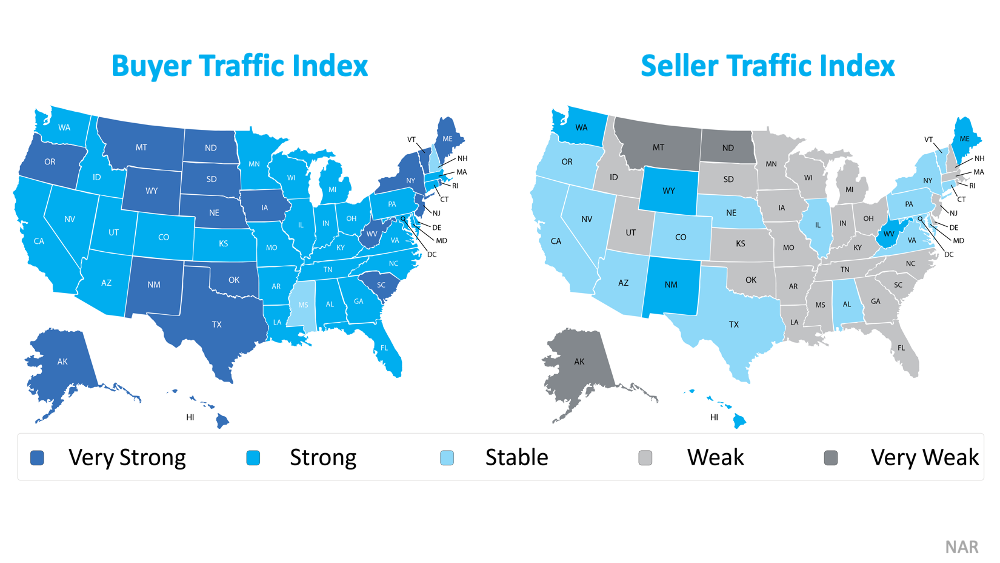
When we consider this definition and how it applies to real estate, a few words stick out: supply and demand. In today’s real estate market, we’re experiencing high buyer demand and very few sellers listing their homes for sale (see maps below):A Look at Home Price Appreciation and What It Means for Sellers | Simplifying The MarketNo matter the industry, anytime there’s more demand than supply, prices naturally rise. It happens because buyers are willing to pay more to secure the scarce product or service they’re looking for. That’s exactly what’s happening in today’s real estate market. Buyers are competing with one another to purchase a home, leading to bidding wars that drive prices up. For sellers, the rising prices mean that opportunity is knocking.

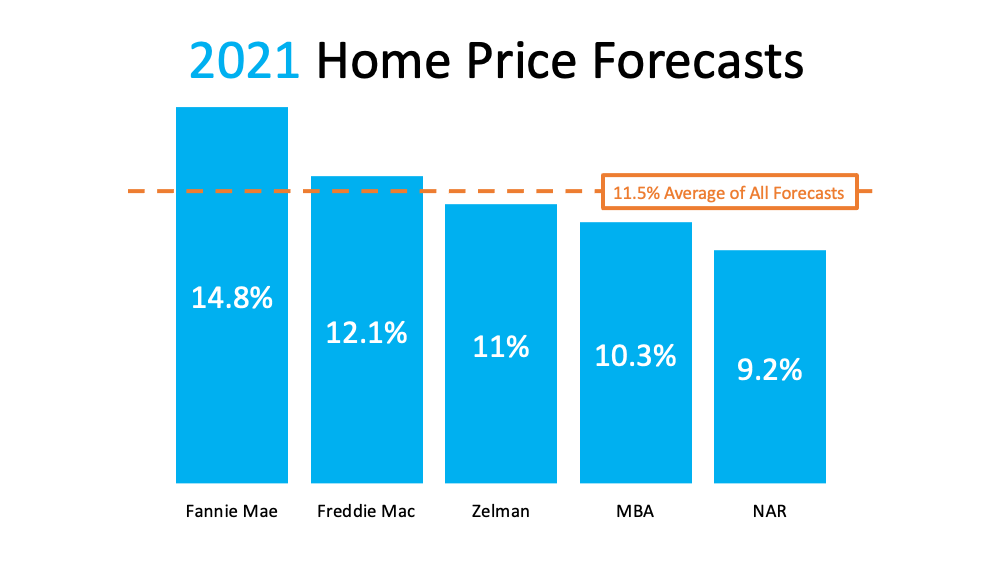
According to Quicken Loans, the national average home price appreciation rate is between 3-5% in a typical year. Today, home prices are appreciating well beyond the norm thanks to high demand. Here are the latest expert projections on the rate of home price appreciation for this year (see chart below):A Look at Home Price Appreciation and What It Means for Sellers | Simplifying The Market

Compared to the normal pace of 3-5% appreciation per year, the current average forecast of nearly 11.5% is significant.

For sellers, this means that with the current rise in prices, your house may be worth more than you realize. That price appreciation helps give your equity a boost. Equity is the difference between what you owe on the home and its market value based on factors like price appreciation. It works like this (see chart below):A Look at Home Price Appreciation and What It Means for Sellers | Simplifying The MarketYou can use your built-up equity to power a move into your dream home, or you can put it toward life-changing goals like funding an education or opening a business.

But don’t wait. While price appreciation is strong now, those same experts say it’ll start to appreciate at a more normalized pace next year. If you list your house sooner rather than later, you’ll be in a better position to capitalize on the higher-than-average home price appreciation we’re seeing today.

Bottom Line

If you’re thinking of selling your house, there really is no time like the present. Let’s connect so you can get an expert market analysis of your home and its potential.

Sellers Are in a Sweet Spot [INFOGRAPHIC]

Posted by

Sellers Are in a Sweet Spot [INFOGRAPHIC] | Simplifying The Market

Sellers Are in a Sweet Spot [INFOGRAPHIC] | Simplifying The Market

Some Highlights

  • In today’s sellers’ market, you’re set up to win big when you list your house.
  • That’s because homes are selling fast, receiving 4.4 offers on average and often selling above the asking price. Then, when you buy your next home, you’ll also win by addressing your changing needs and taking advantage of near historic-low mortgage rates.
  • If you’re ready to make a move, let’s connect so you can capitalize on today’s market and find your next dream home.

The Best Use of Time (and Money) When It Comes to Renovations

Posted by

The Best Use of Time (and Money) When It Comes to Renovations | Simplifying The Market

In the current sellers’ market, many homeowners wonder what, if anything, needs to be remodeled before they list their house. That’s where a trusted real estate professional comes in. They can help you think through today’s market conditions and how they impact what you should – and shouldn’t – renovate before selling.

Here are some considerations a professional will guide you through:

1. With current supply challenges, buyers may be willing to take on projects of their own.

A more balanced market typically sees a 6-month supply of homes for sale. Above that, and we’re in a buyers’ market. Below that, and we’re in a sellers’ market. According to a recent report by the National Association of Realtors (NAR), our current supply of homes for sale, while rising, still remains solidly in sellers’ market territory:

Unsold inventory sits at a 2.6-month supply at the current sales pace, modestly up from May’s 2.5-month supply but down from 3.9 months in June 2020.”

So, what’s that mean for you? If you’re a seller trying to decide whether or not to renovate, this is especially important because it’s indicative of buyer behavior. When there aren’t enough homes for sale, buyers may be more willing to purchase a home that doesn’t meet all their needs and renovate it themselves later.

2. Not all renovation projects are equal.

You don’t want to spend time and money on a project that isn’t worth the cost or is too niche design-wise for some homebuyers. According to an article by Renofi.com, basing home updates on what’s trendy right now can be a costly mistake:

The last thing you as a homeowner want to do is center your home design around a passing fad – even worse, one thats design quality won’t last a good while.”

Before making any decisions, talk to your real estate advisor. They have insight into what other sellers are doing before listing their homes and how buyers are reacting to those upgrades. Don’t spend the time and money to be trendy – if your buyer wants to upgrade to the newest fad later, they can.

3. If you’ve already made upgrades this past year, your agent can help spotlight them.

If you have already completed some renovations on your house, you’re not alone. The pandemic kept people at home last year, and during that time, many homeowners completed some home improvement projects. HomeAdvisor’s 2021 State of Home Spending Report found:

“35% of households that completed an improvement project undertook some type of interior painting, while 31% completed a bathroom remodel and 26% installed new flooring.”

Let your real estate professional know if you fall in this category. They can highlight any recent upgrades you’ve made in your house’s listing.

Bottom Line

When it comes to renovations, your return-on-investment should be top of mind. Let’s connect today to talk through any upgrades you’ve already made and to find out what you should prioritize before you sell to maximize your house’s potential.

The Community and Economic Impacts of a Home Sale

Posted by

The Community and Economic Impacts of a Home Sale | Simplifying The Market

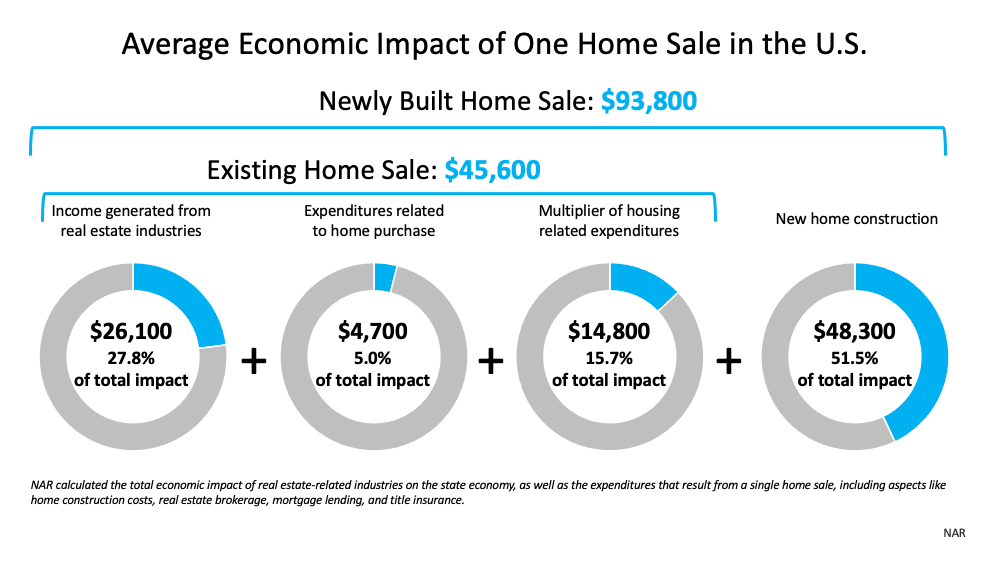
If you’re thinking of buying or selling a house, chances are you’re focusing on the many extraordinary ways it’ll change your life. What you may not realize is that decision impacts people’s lives far beyond your own. Home purchases and sales are significant drivers of economic activity. They have a major impact on your community and the entire U.S. economy via the multiple industries and professionals that take part in the process.

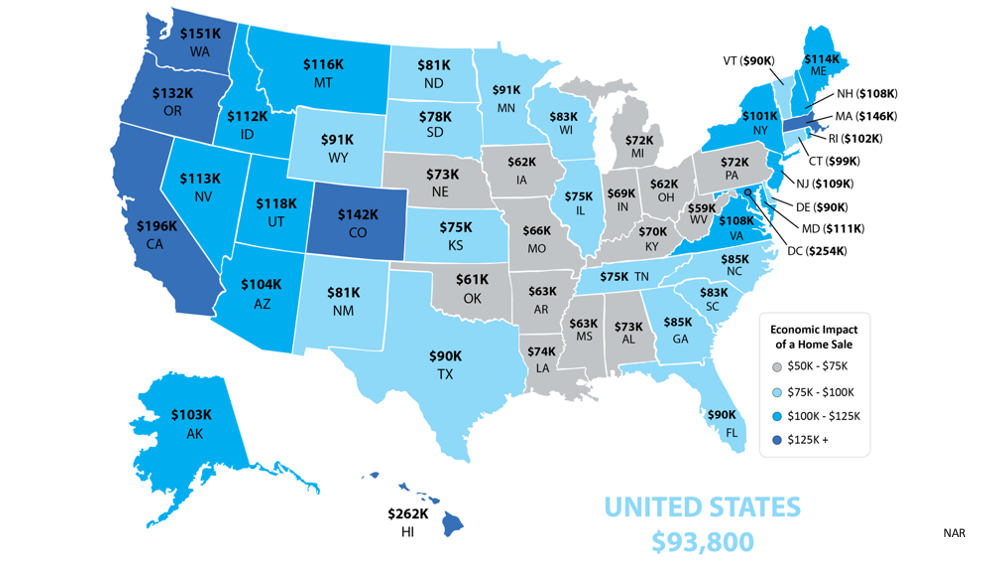
The National Association of Realtors (NAR) releases a report each year that highlights just how much economic activity a home sale generates. The chart below shows how the sale of both a newly built home and an existing home impact the economy:The Community and Economic Impacts of a Home Sale | Simplifying The MarketTo dive a level deeper, NAR also provides a detailed look at how that varies state-by-state for newly-built homes (see map below):The Community and Economic Impacts of a Home Sale | Simplifying The MarketAs you can see, a single home sale can have a massive effect on the overall economy. Ali Wolf, Chief Economist for Zonda, talks about this in a recent article, noting there’s a significant impact at each distinct phase of the transaction:

The housing market contributes to the economy in four main stages: during planning and land development, throughout the actual construction of the home, at the point of sale, and upon moving in.

When you buy or sell a home, you’re leaving a lasting impression on the community at large in addition to fulfilling your own needs. That’s because each stage of the process involves numerous contractors, specialists, lawyers, town and city officials, and so many other professionals. Every individual you work with, from your trusted real estate advisor to the architects who design new homes, has their own team of professionals involved behind the scenes.

Bottom Line

Homebuyers and sellers are economic drivers in their community and beyond. If you’re thinking of buying or selling, let’s connect today to start the process. It won’t just change your life; it’ll make a powerful impact on our entire community.

Ready To Sell, but Don’t Know Where You’ll Go? [INFOGRAPHIC]

Posted by

Ready To Sell, but Don’t Know Where You’ll Go? [INFOGRAPHIC] | Simplifying The Market

Ready To Sell, but Don’t Know Where You’ll Go? [INFOGRAPHIC] | Simplifying The Market

Some Highlights

  • If you’re thinking of selling your house but don’t know what you should buy, you have options.
  • Existing homes offer a wide variety of home styles, an established neighborhood, and lived-in charm. Meanwhile, new home construction lets you create your perfect home, cash in on energy efficiency, and minimize repairs.
  • Whether you’re looking for newly built or existing homes, both have their perks. If you’re ready to sell your house, let’s connect today to go over the perks of both existing and newly built homes to find out what’s right for you.

Surprising Shift Favors Homeowners: Buyers Now Prefer Existing Homes

Posted by

Surprising Shift Favors Homeowners: Buyers Now Prefer Existing Homes | Simplifying The Market

In April, the National Association of Home Builders (NAHB) posted an article, Home Buyers’ Preferences Shift Towards New Construction, which reported:

60% of people who were looking to buy a home in 2020 said they’d prefer new construction to an existing home.

However, it seems buyers are now shifting their preferences back to existing homes.

The latest Consumer Confidence Survey reveals the percentage of Americans planning to buy a home in the next six months is virtually the same as it was back in March. However, the percentage that plan to buy a newly constructed home is lower for that same period.

NAHB confirms this sentiment in their latest Housing Trends Report. The organization explains that existing homes are now the top preference among today’s buyers. Here’s a breakdown of those findings:Surprising Shift Favors Homeowners: Buyers Now Prefer Existing Homes | Simplifying The Market

Why the shift?

There are several reasons why buyer preference is shifting. Here are two that impact purchasers looking to move in now:

  • The process may move faster. Builders may not be able to guarantee when the house will be complete and ready for move-in due to supply chain challenges with materials like lumber and appliances. If you buy an existing home, not only is it ready, it also likely has a refrigerator, range, and other necessary home appliances already.
  • There are no unexpected costs during the buying process. With the price of land, labor, and lumber being so volatile, many builders are including an escalation clause in the price negotiation to cover rising expenses. With an existing home, the final price you will pay is negotiated upfront.

Bottom Line

If you’re a homeowner looking to sell, your house is more attractive to a greater number of buyers as compared to earlier in the year. This might be the time for us to connect to discuss the possibility.

Sellers: Make Today’s Home Price Appreciation Work for You

Posted by

Sellers: Make Today’s Home Price Appreciation Work for You | Simplifying The Market

Home prices continue to rise as we move through the summer, and that’s good news for sellers who are looking to maximize their home’s potential. If you’re on the fence about whether to list your house now or later, the question you should really ask is: will this price appreciation last?

Here’s what three leading industry experts have to say about what lies ahead:

Lawrence Yun, Chief Economist, National Association of Realtors (NAR):

“At a broad level, home prices are in no danger of a decline due to tight inventory conditions, but I do expect prices to appreciate at a slower pace by the end of the year.”

Selma Hepp, Deputy Chief Economist, CoreLogic:

“The imbalance between robust demand and dismal availability of for-sale homes has led to a continual bidding over asking prices, which reached record levels in recent months . . . . Nevertheless, with more new listings and new home construction, home price acceleration that has built momentum, and continues to reach new highs, will likely slow later this summer but remain in double digits.”

George Ratiu, Chief Economist, realtor.com:

Many sellers are going to take advantage of higher prices. This summer is going to signal the move to the next chapter, and this will very much be the year they’re going to put their home on the market.”

What It Means for You:

The experts agree that the summer months give sellers a great opportunity to capitalize on today’s home prices. And while prices aren’t expected to depreciate, the rise in prices is forecast to moderate over the next few years. That means selling your house today could set you up for a bigger win.

Bottom Line

Listen to the experts. If you’re ready to make a move, let’s connect to discuss selling your house sooner rather than later so you can take advantage of today’s home price appreciation before it moderates.

Home Sellers: There Is an Extra Way To Welcome Home Our Veterans

Posted by

Home Sellers: There Is an Extra Way To Welcome Home Our Veterans | Simplifying The Market

Some veterans are finding it difficult to obtain a home in today’s market. According to the National Association of Realtors (NAR):

“Conventional conforming mortgages (mortgages that conform to guidelines set by Fannie Mae and Freddie Mac), accounted for 74% of mortgages obtained by homebuyers in May 2021, an increase from about 65% during 2018 through 2019…The share of VA-guaranteed loans has also decreased to 7% in May 2021 from about 10% in past years.”

Recent data in the latest Origination Insight Report from Ellie Mae sheds light on the continuation of this trend. Below, we can see just how small of a share of total financing VA loans made up in June of 2021, according to that Ellie Mae report:Home Sellers: There Is an Extra Way To Welcome Home Our Veterans | Simplifying The MarketThe drop in VA loan usage can be attributed to the difficulties veterans continue to face when buying a home. The NAR article elaborates:

“It is extremely difficult for FHA/VA buyers to get accepted in a multiple offer situation. They are on the bottom of the hierarchy.”

One contributing factor is that buyers with VA loans can’t waive certain contingencies. However, just because a certain contingency must be present for a particular buyer doesn’t mean that buyer’s offer shouldn’t be considered.

What Should Sellers Do To Help Create a Level Playing Field?

As a seller, it’s important to consider every offer in front of you regardless of loan type. If you’re selecting an offer because some contingencies are waived, keep in mind that it doesn’t always mean the offer is what’s best for you.

Buyers who can’t waive specific contingencies may adjust other terms in their offer to make it more appealing to sellers. This may depend on several factors, including their loan type and location, but a motivated buyer and their agent will do everything they can to present an offer that’s as appealing to you as possible.

Ultimately, you should make sure you take time to really understand the terms of their offer and see the big picture. Working with a driven buyer who’s motivated to purchase your house may provide a better opportunity for you to reach your overall best option and what’s most important to you.

Bottom Line

If you’re ready to sell, let’s connect. Together, we can make sure you understand the terms of all offers so you can give each one fair consideration, including those buyers using a VA loan. Our veterans sacrifice so much for our country. They’ve earned our gratitude and should have the same opportunity to obtain the home of their dreams.

A Look at Housing Supply and What It Means for Sellers

Posted by

A Look at Housing Supply and What It Means for Sellers | Simplifying The Market

One of the hottest topics of conversation in today’s real estate market is the shortage of available homes. Simply put, there are many more potential buyers than there are homes for sale. As a seller, you’ve likely heard that low supply is good news for you. It means your house will get more attention, and likely, more offers. But as life begins to return to normal, you may be wondering if that’s something that will change.

While it may be tempting to blame the pandemic for the current inventory shortage, the pandemic can’t take all the credit. While it did make some sellers hold off on listing their houses over the past year, the truth is the low supply of homes was years in the making. Let’s take a look at the root cause and what the future holds to uncover why now is still a great time to sell.

Where Did the Shortage Come From?

It’s not just today’s high buyer demand. Our low supply goes hand-in-hand with the number of new homes built over the past decades. According to Sam Khater, VP and Chief Economist at Freddie Mac:

“The main driver of the housing shortfall has been the long-term decline in the construction of single-family homes.”

Data in a recent report from the National Association of Realtors (NAR) tells the same story. New home construction has been lagging behind the norm for quite some time. Historically, builders completed an average of 1.5 million new housing units per year. However, since the housing bubble in 2008, the level of new home construction has fallen off (see graph below):A Look at Housing Supply and What It Means for Sellers | Simplifying The MarketThe same NAR report elaborates on the impact of this below-average pace of construction:

. . . the underbuilding gap in the U.S. totaled more than 5.5 million housing units in the last 20 years.” 

“Looking ahead, in order to fill an underbuilding gap of approximately 5.5 million housing units during the next 10 years, while accounting for historical growth, new construction would need to accelerate to a pace that is well above the current trend, to more than 2 million housing units per year. . . .”

That means if we build even more new houses than the norm every year, it’ll still take a decade to close the underbuilding gap contributing to today’s supply-and-demand mix. Does that mean today’s ultimate sellers’ market is here to stay?

We’re already starting to see an increase in new home construction, which is great news. But newly built homes can’t bridge the supply gap we’re facing right now on their own. In the State of the Nation’s Housing 2021 Report, the Joint Center for Housing Studies of Harvard University (JCHS) says:

“…Although part of the answer to the nation’s housing shortage, new construction can only do so much to ease short-term supply constraints. To meet today’s strong demand, more existing single-family homes must come on the market.

Early Indicators Show More Existing-Home Inventory Is on Its Way

When we look at existing homes, the latest reports signal that housing supply is growing gradually month-over-month. This uptick in existing homes for sale shows things are beginning to shift. Based on recent data, Odeta Kushi, Deputy Chief Economist at First American, has this to say:

“It looks like existing inventory is starting to inch up, which is good news for a housing market parched for more supply.”

Lawrence Yun, Chief Economist at NAR, echoes that sentiment:

“As the inventory is beginning to pick up ever so modestly, we are still facing a housing shortage, but we may have turned a corner.”

So, what does all of this mean for you? Just because life is starting to return to normal, it doesn’t mean you missed out on the best time to sell. It’s not too late to take advantage of today’s sellers’ market and use rising equity and low interest rates to make your next move.

Bottom Line

It’s still a great time to sell. Even though housing supply is starting to trend up, it’s still hovering near historic lows. Let’s connect to discuss how you can list your house now and use the inventory shortage to get the best possible terms for you.