

910-279-9398 Download Our Brochure
  • Homes for sale in coastal southeastern NC

Archive for the ‘First Time Home Buyers’ Category

Looking for a Place To Call Home? Consider a Condominium.

Posted by

Looking for a Place To Call Home? Consider a Condominium. | Simplifying The Market

It’s no secret that one of the top stories in today’s real estate market is low housing supply and high buyer demand. If you’re a first-time buyer looking for a starter home or are someone who’s interested in downsizing, it may be worth considering a condominium (condo) as a worthwhile option.

In fact, trends indicate condos are gaining popularity among buyers. In the latest Existing Homes Sales Report from the National Association of Realtors (NAR), the data shows condo sales rising throughout the first half of this year (see graph below):Looking for a Place To Call Home? Consider a Condominium. | Simplifying The MarketThere are a few reasons more and more people are opting to buy condos – the benefits of condo life can be quite compelling. Let’s explore the main perks to find out if a condo is a good fit for you.

Affordability

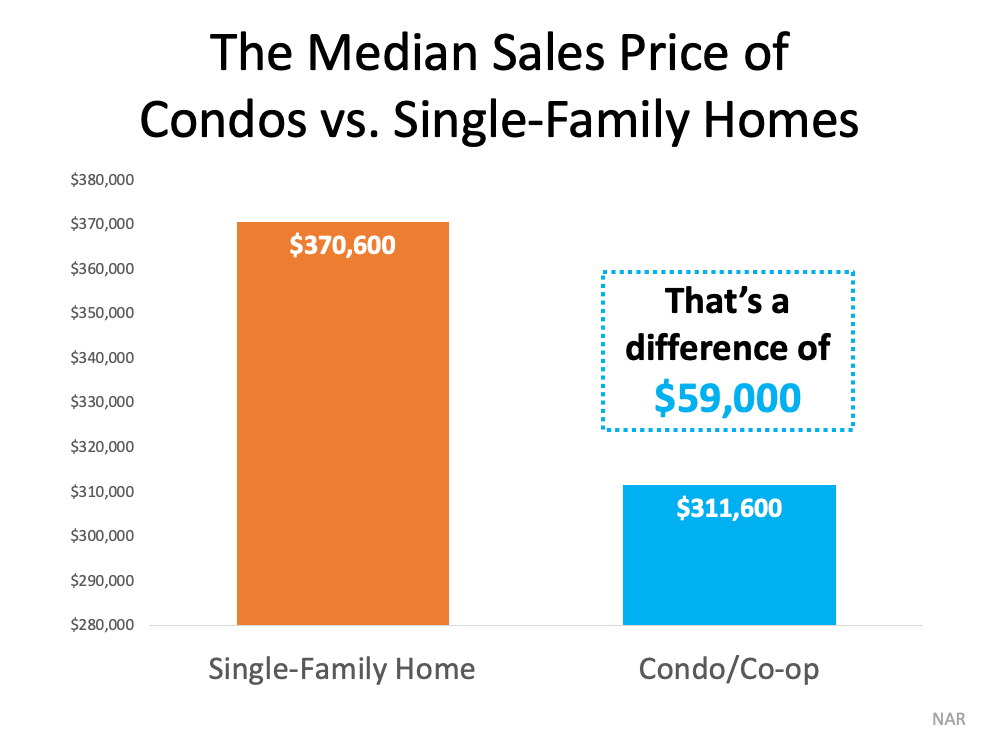
According to the NAR report, the median sales price of a condo is roughly $59,000 less than the median price of a single-family detached home (see graph below). This makes condos a great option for first-time homebuyers, those with limited down payment savings, or those looking to save money by downsizing.Looking for a Place To Call Home? Consider a Condominium. | Simplifying The Market
Maintenance

A recent article from BankRate adds low maintenance as another perk of a condo lifestyle. Generally, exterior maintenance for condos is handled by a Homeowner’s Association (HOA). This can include things like landscaping and upholding a certain standard of cleanliness and condition for walkways, siding, and roofs. If you’re looking for a lower-maintenance option or see the appeal in being hands-off with upkeep, condos may be a good choice for you. With exterior maintenance off your plate, you’ll have more time for yourself and your hobbies.

Amenities

You can use that free time to enjoy some of the value-adding features your condo community may have, which could include dog parks, pools, a rentable clubhouse and grilling area for events, and more. If being able to host or attend community social outings is important to you, condos may give you more opportunities to enjoy the company of your neighbors. As a bonus, some condos even have gyms and on-site security teams.

Ultimately, the choice is yours. Condos are great options that often come with various features and benefits that may be important for your lifestyle. Fannie Mae sums up the appeal nicely:

Condominiums, or condos, can be great alternatives to detached homes. City dwellers, singles, couples, seniors, and many others may find condos that suit their needs and budgets. Others may simply prefer low-maintenance living. Buyers who feel ‘priced out’ of homes may discover condos offer an affordable homeownership alternative.

Bottom Line

If you’re looking for a home, it may be time to consider a condo as an option. Let’s connect to explore if one would be a good fit for your homeownership needs.

With Rents on the Rise – Is Now the Time To Buy?

Posted by

With Rents on the Rise – Is Now the Time To Buy? | Simplifying The Market

According to recent data from realtor.com, median rental prices have reached their highest point ever recorded in many areas across the country. The report found rents rose by 8.1% from the same time last year. As it notes:

Beyond simply recovering to pre-pandemic levels, rents across the country are surging. Typically, rents fluctuate less than 1% from month to month. In May and June, rents increased by 3.0% and 3.2% from each month to the next.”

If you’re a renter concerned about rising prices, now may be the time to consider purchasing a home.

Monthly Rents Are Higher Than Monthly Mortgage Payments

When you weigh your options of whether to buy a home or continue renting, how much you’ll pay each month is likely top of mind. According to the National Association of Realtors (NAR), monthly mortgage payments are rising, but they’re still significantly lower than the typical rental payment. NAR indicates the latest data on homes closed shows the median monthly mortgage payment is $1,204.

By contrast, the median national rent is $1,575 according to the most current data provided by realtor.com. In other words, buyers who recently purchased a home locked in a monthly payment that is, on average, $371 lower than what renters pay today (see graph below):With Rents on the Rise – Is Now the Time To Buy? | Simplifying The Market

Rents Are Rising Sharply, and They Continue To Increase

The difference in monthly housing costs when comparing renting and homebuying today is significant, but many would-be homebuyers wonder about the future of rental prices. If we look to historical Census data as a reference, the median asking rent has risen consistently since 1988 (see graph below):With Rents on the Rise – Is Now the Time To Buy? | Simplifying The MarketThe rise in rent over time clearly shows one of the major advantages homeownership has over renting: stable housing costs. Renters face increasing costs every year. When you purchase your home, your mortgage rate is locked in for 30 years, meaning your monthly payment stays the same over time. That gives you welcome peace of mind and predictability for many years ahead.

Bottom Line

With rents continuing to rise across the country, renters should consider if now is the right time to buy. There are multiple benefits to buying sooner rather than later. Let’s discuss your options so you can make your most powerful decision.

Key Questions To Ask Yourself Before Buying a Home

Posted by

Key Questions To Ask Yourself Before Buying a Home | Simplifying The Market

Sometimes it can feel like everyone has advice when it comes to buying a home. While your friends and loved ones may have your best interests in mind, they may also be missing crucial information about today’s housing market that you need to make your best decision.

Before you decide whether you’re ready to buy a home, you should know how to answer these three questions.

1. What’s Going on with Home Prices?

Home prices are one factor that directly impacts how much it will cost to buy a home and how much you stand to gain as a homeowner when prices appreciate.

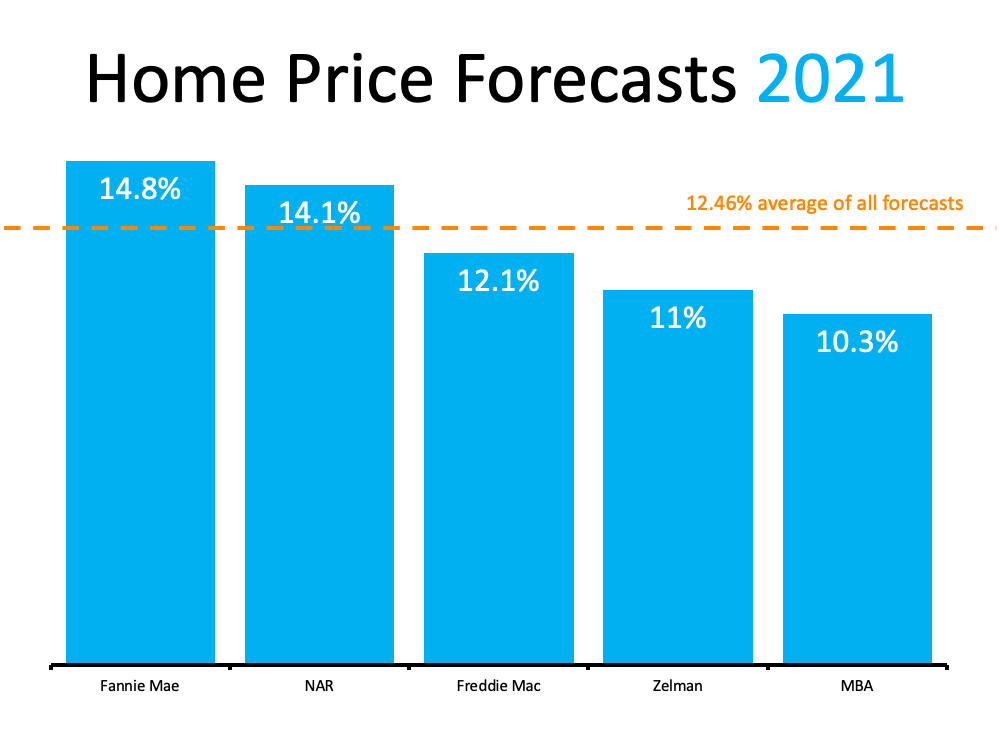
The graph below shows just how much experts are forecasting prices to rise this year:Key Questions To Ask Yourself Before Buying a Home | Simplifying The MarketContinued price appreciation is great news for existing homeowners but can pose a significant challenge if you wait to buy. Using these forecasts, you can determine just how much waiting could cost you. If prices increase based on the average of all forecasts (12.46%), a median-priced home that cost $350,000 in January of 2021 will cost an additional $43,610 by the end of the year. What does this mean for you? Put simply, with home prices increasing, the longer you wait, the more it could cost you.

2. Are Today’s Low Mortgage Rates Going To Last?

Another significant factor that should inform your decision is mortgage interest rates. Today’s average rates remain close to record-lows. Much like prices, though, experts forecast rates will rise over the coming months, as the chart below shows:Key Questions To Ask Yourself Before Buying a Home | Simplifying The MarketYour monthly mortgage payment can be significantly impacted by even the slightest increase in mortgage rates, which makes the overall cost of the home greater over time when you wait.

3. Why Is Homeownership Important to You?

The final question is a personal one. Before deciding, you’ll need to understand your motivation to buy a home and why homeownership is an important goal for you. The financial benefits of owning a home are often easier to account for than the many emotional ones.

The 2021 National Homeownership Market Survey shows that six of the nine reasons Americans value homeownership are because of how it impacts them on a personal, aspirational level. The survey says homeownership provides:

  • Stability
  • Safety
  • A Sense of Accomplishment
  • A Life Milestone
  • A Stake in the Community
  • Personal Pride

The National Housing & Financial Capability Survey from NeighborWorks America also highlights the emotional benefits of homeownership:Key Questions To Ask Yourself Before Buying a Home | Simplifying The MarketClearly, there’s a value to homeownership beyond the many great financial opportunities it provides. It gives homeowners a sense of pride, safety, security, and accomplishment – which impacts their lives and how they feel daily.

Bottom Line

Homeownership is life-changing, and buying a home can positively impact you in so many ways. With any decision this big, it helps to have a trusted advisor by your side each step of the way. If you’re ready to begin your journey toward homeownership, let’s connect to discuss your options and begin your journey.

Waiting To Buy a Home Could Cost You [INFOGRAPHIC]

Posted by

Waiting To Buy a Home Could Cost You [INFOGRAPHIC] | Simplifying The Market

Waiting To Buy a Home Could Cost You [INFOGRAPHIC] | Simplifying The Market

Some Highlights

  • If you’re thinking of buying a home but wondering if waiting a few years will save you in the long run, think again.
  • The longer the wait, the more you’ll pay, especially when mortgage rates and home prices rise. Even the slightest change in the mortgage rate can have a big impact on your buying power no matter your price point.
  • Don’t assume waiting will save you money. Let’s connect to set the ball into motion today while mortgage rates are hovering near historic lows.

Experts Agree: Options Are Improving for Buyers [INFOGRAPHIC]

Posted by

Experts Agree: Options Are Improving for Buyers [INFOGRAPHIC] | Simplifying The Market

Experts Agree: Options Are Improving for Buyers [INFOGRAPHIC] | Simplifying The Market

Some Highlights

  • Buyers hoping for more homes to choose from may be in luck as housing inventory begins to rise. Many experts agree – new sellers listing their homes is great news for buyers and the overall market.
  • Although the supply increases are modest, more homes means more options for buyers. A rise in inventory may also help slow the price gains we’ve seen recently and could be a sign of good things to come.
  • If you’re searching for a home, rising inventory is welcome news. Let’s connect today to discuss new listings in our area.

Diving Deep into Today’s Biggest Buyer Concerns

Posted by

Diving Deep into Today’s Biggest Buyer Concerns | Simplifying The Market

Last week, Fannie Mae released their Home Purchase Sentiment Index (HPSI). Though the survey showed 77% of respondents believe it’s a “good time to sell,” it also confirms what many are sensing: an increasing number of Americans believe it’s a “bad time to buy” a home. The percentage of those surveyed saying it’s a “bad time to buy” hit 64%, up from 56% last month and 38% last July.

The latest HPSI explains:

“Consumers also continued to cite high home prices as the predominant reason for their ongoing and significant divergence in sentiment toward homebuying and home-selling conditions. While all surveyed segments have expressed greater negativity toward homebuying over the last few months, renters who say they are planning to buy a home in the next few years have demonstrated an even steeper decline in homebuying sentiment than homeowners. It’s likely that affordability concerns are more greatly affecting those who aspire to be first-time homeowners than other consumer segments.”

Let’s look closely at the market conditions that impact home affordability.

A mortgage payment is determined by the price of the home and the mortgage rate on the loan used to purchase it. Lately, monthly mortgage payments have gone up for buyers for two key reasons:

  1. Mortgage rates have increased from 2.65% this past January to 2.9%.
  2. Home prices have increased by 15.4% over the last 12 months.

Based on these rising factors, a home may be less affordable today, but it doesn’t mean it’s not affordable.

Three weeks ago, ATTOM Data released their second-quarter 2021 U.S. Home Affordability Report which explained that the major ownership costs on the typical home as a percent of the average national wage had increased from 22.2% in the second quarter of 2020 to 25.2% in the second quarter of this year. They also went on to explain:

“Still, the latest level is within the 28 percent standard lenders prefer for how much homeowners should spend on mortgage payments, home insurance and property taxes.

In the same report, Todd Teta, Chief Product Officer with ATTOM, confirms:

Average workers across the country can still manage the major expenses of owning a home, based on lender standards.”

It’s true that monthly mortgage payments are greater than they were last year (as the ATTOM data shows), but they’re not unaffordable when compared to the last 30 years. While payments have increased dramatically during that several-decade span, if we adjust for inflation, today’s mortgage payments are 10.7% lower than they were in 1990.

What’s that mean for you? While you may not get the homebuying deal someone you know got last year, that doesn’t mean you shouldn’t still buy a home. Here are your alternatives to buying and the trade-offs you’ll have with each.

Alternative 1: I’ll rent instead.

Some may consider renting as the better option. However, the monthly cost of renting a home is skyrocketing. According to the July National Rent Report from Apartment List:

“…So far in 2021, rental prices have grown a staggering 9.2%. To put that in context, in previous years growth from January to June is usually just 2 to 3%. After this month’s spike, rents have been pushed well above our expectations of where they would have been had the pandemic not disrupted the market.”

If you continue to rent, chances are your rent will keep increasing at a fast pace. That means you could end up spending significantly more of your income on your rental as time goes on, which could make it even harder to save for a home.

Alternative 2: I’ll wait it out.

Others may consider waiting for another year and hoping that purchasing a home will be less expensive then. Let’s look at that possibility.

We’ve already established that a monthly mortgage payment is determined by the price of the home and the mortgage rate. A lower monthly payment would require one of those two elements to decrease over the next year. However, experts are forecasting the exact opposite:

  • The Mortgage Bankers Association (MBA) projects mortgage rates will be at 4.2% by the end of next year.
  • The Home Price Expectation Survey (HPES), a survey of over 100 economists, investment strategists, and housing market analysts, calls for home prices to increase by 5.12% in 2022.

Based on these projections, let’s see the possible impact on a monthly mortgage payment:Diving Deep into Today’s Biggest Buyer Concerns | Simplifying The MarketBy waiting until next year, you’d potentially pay more for the home, need a larger down payment, pay a higher mortgage rate, and pay an additional $3,696 each year over the life of the mortgage.

Bottom Line

While you may have missed the absolute best time to buy a home, waiting any longer may not make sense. Mark Fleming, Chief Economist at First American, says it best:

“Affordability is likely to worsen before it improves, so try to buy it now, if you can find it.”

The Truths Young Homebuyers Need To Hear

Posted by

The Truths Young Homebuyers Need To Hear | Simplifying The Market

For many young or first-time homebuyers, purchasing a home can feel intimidating. A recent survey shows some homebuyers ages 25 to 40 may be unsure about the homebuying process and what they can afford. It found:

  • “1 in 4 underestimated their buying potential by $150k or more”
  • “1 in 4 underestimated the increase in value by $100k or more”
  • “47% don’t know what a good interest rate is”

Because they feel uncertain, many young homebuyers have given up on their search, or worse, they’ve decided homebuying isn’t for them and never started on their journey to begin with.

If you’re interested in buying but aren’t sure where to begin, here are three key concepts about homeownership you should understand before you get started.

1. What You Need To Know About Down Payments

Saving for a down payment is sometimes viewed as one of the biggest obstacles for homebuyers, but that doesn’t have to be the case. As Freddie Mac says:

The most damaging down payment myth—since it stops the homebuying process before it can start—is the belief that 20% is necessary.”

According to the most recent Home Buyers and Sellers Generational Trends Report from the National Association of Realtors (NAR), the median down payment for homes purchased between July 2019 and June 2020 was only 12%. That number is even lower when we control for age – for buyers in the 22 to 30 age range, the median down payment was only 6%.

2. You May Be Able To Afford More Home Than You Think

Working remotely, exercising, and generally spending more time than ever in our homes has changed what many people are looking for in their living space. However, some young homebuyers don’t feel they can afford a home that suits their growing needs and have decided to continue renting instead. That means they’ll miss out on some of the long-term benefits of owning a home. As an article recently published by NAR points out:

“Many young adults are underestimating how much they need for homeownership, the survey finds. Millennials underestimated how much home they can afford right now, how much interest they would pay over a 30-year mortgage, and how much home values appreciate, on average, over 10 years…”

Knowing how much home you can afford when starting the buying process is critical and could be the game-changer that gets you from renting to buying.

3. Homeownership Will Become Less Affordable the Longer You Wait

Finally, with mortgage rates starting to rise along with home prices appreciating, putting off buying a home now could cost you much more later. Sam Khater, Chief Economist at Freddie Mac, notes:

As the economy progresses and inflation remains elevated, we expect that rates will continually rise in the second half of the year.”

Most experts forecast interest rates will rise in the months ahead, and even the smallest increase can influence your buying power. If you’ve been on the fence about buying a home, there’s no time like the present.

Bottom Line

If you feel overwhelmed by the prospect of starting your home search, you’re not alone. Let’s connect today so we can talk more about the process, what you’ll need to start your search, and what to expect.

Homeowner Wealth Increases Through Growing Equity This Year

Posted by

Homeowner Wealth Increases Through Growing Equity This Year | Simplifying The Market

Building financial wealth and stability remains one of the top reasons Americans choose to own a home, and as a homeowner, your wealth often grows without you even realizing it. In a recent paper published by the Urban Institute, Home Ownership is Affordable Housing, author Mike Loftin illustrates how homeowners increase their equity and their wealth simply by making monthly mortgage payments:

“The principal portion that reduces the loan balance builds the homeowner’s equity. In doing so, the principal payments behave like an automatic savings account. The principal payment is not money going out; it is money staying in.”

But home equity – the difference between the value of your home and what you currently owe – isn’t just built through your monthly principal payments. Home price appreciation plays a vital role in growing your equity and, ultimately, your wealth.

As Freddie Mac explains:

“Homeownership has cemented its role as part of the American Dream, providing families with a place that is their own and an avenue for building wealth over time. This ‘wealth’ is built, in large part, through the creation of equity…Building equity through your monthly principal payments and appreciation is a critical part of homeownership that can help you create financial stability.”

Homeowners Continue To See Equity Increase

CoreLogic recently published their latest Homeowner Equity Insights Report, and it shows continued growth in equity amidst record home price appreciation. The report provides several key takeaways, all of which point to rising wealth for homeowners:

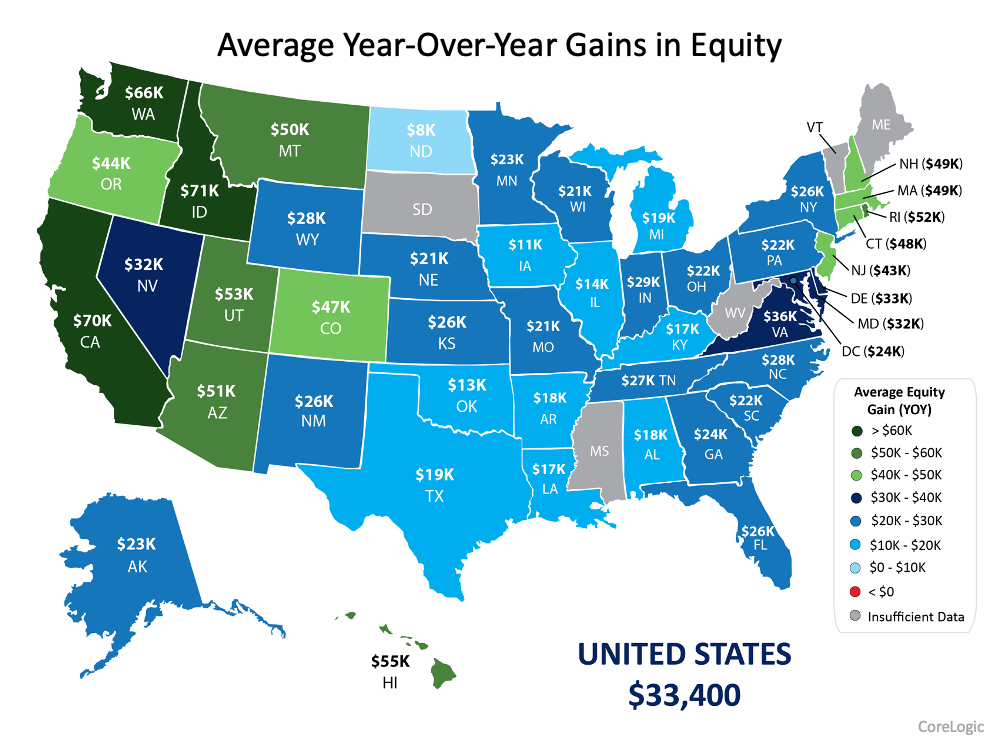
  1. The average equity gain of mortgaged homes during the past year was $33,400
  2. The current average equity of mortgaged homes is greater than $216,000
  3. There was a 6% increase in total homeowner equity over the past year
  4. Total U.S. homeowner equity has reached nearly $1.9 trillion

Here, you can see the equity gains by state:Homeowner Wealth Increases Through Growing Equity This Year | Simplifying The Market

Equity Provides Homeowners with Flexibility

In addition to being a critical tool in building wealth, a homeowner’s equity also provides significant flexibility. When you sell your house, the accumulated equity comes back to you in the sale. Recent increases in home equity coupled with record-low mortgage rates mean it could be the perfect time for homeowners looking to make a move.

Mark Fleming, Chief Economist at First American, notes:

“Existing homeowners today are sitting on record amounts of equity. As homeowners gain equity in their homes, the temptation grows to list their current home for sale and use the equity to purchase a larger or more attractive home.”

Increasing equity also helps families facing challenges brought on by the pandemic. Frank Martell, President and CEO of CoreLogic, explains in the recent Homeowner Equity Insights Report:

“Homeowner equity has more than doubled over the past decade and become a crucial buffer for many weathering the challenges of the pandemic. These gains have become an important financial tool and boosted consumer confidence in the U.S. housing market, especially for older homeowners and baby boomers who’ve experienced years of price appreciation.”

Bottom Line

Home equity has always been a powerful wealth-building tool, and homeowners continue to see their financial stability increase. Let’s connect today so you can better understand how much equity you have in your current home or if you’re ready to take the next step in building your savings as a homeowner.

Pre-Approval Makes All the Difference When Buying a Home

Posted by

Pre-Approval Makes All the Difference When Buying a Home | Simplifying The Market

You may have been told that it’s important to get pre-approved at the beginning of the homebuying process, but what does that really mean, and why is it so important? Especially in today’s market, with rising home prices and high buyer competition, it’s crucial to have a clear understanding of your budget so you stand out to sellers as a serious homebuyer.

Being intentional and competitive are musts when buying a home right now. Pre-approval from a lender is the only way to know your true price range and how much money you can borrow for your loan. Just as important, being able to present a pre-approval letter shows sellers you’re a qualified buyer, something that can really help you land your dream home in an ultra-competitive market.

With limited housing inventory, there are many more buyers active in the market than there are sellers, and that’s creating some serious competition. According to the National Association of Realtors (NAR), homes are receiving an average of 5.1 offers for sellers to consider. As a result, bidding wars are more and more common. Pre-approval gives you an advantage if you get into a multiple-offer scenario, and these days, it’s likely you will. When a seller knows you’re qualified to buy the home, you’re in a better position to potentially win the bidding war.

Freddie Mac explains:

“By having a pre-approval letter from your lender, you’re telling the seller that you’re a serious buyer, and you’ve been pre-approved for a mortgage by your lender for a specific dollar amount. In a true bidding war, your offer will likely get dropped if you don’t already have one.”

Every step you can take to gain an advantage as a buyer is crucial when today’s market is constantly changing. Interest rates are low, prices are going up, and lending institutions are regularly updating their standards. You’re going to need guidance to navigate these waters, so it’s important to have a team of professionals such as a loan officer and a trusted real estate agent making sure you take the right steps and can show your qualifications as a buyer when you find a home to purchase.

Bottom Line

In a competitive market with low inventory, a pre-approval letter is a game-changing piece of the homebuying process. Not only does being pre-approved bring clarity to your homebuying budget, but it shows sellers how serious you are about purchasing a home.